 Ship Modelers Database
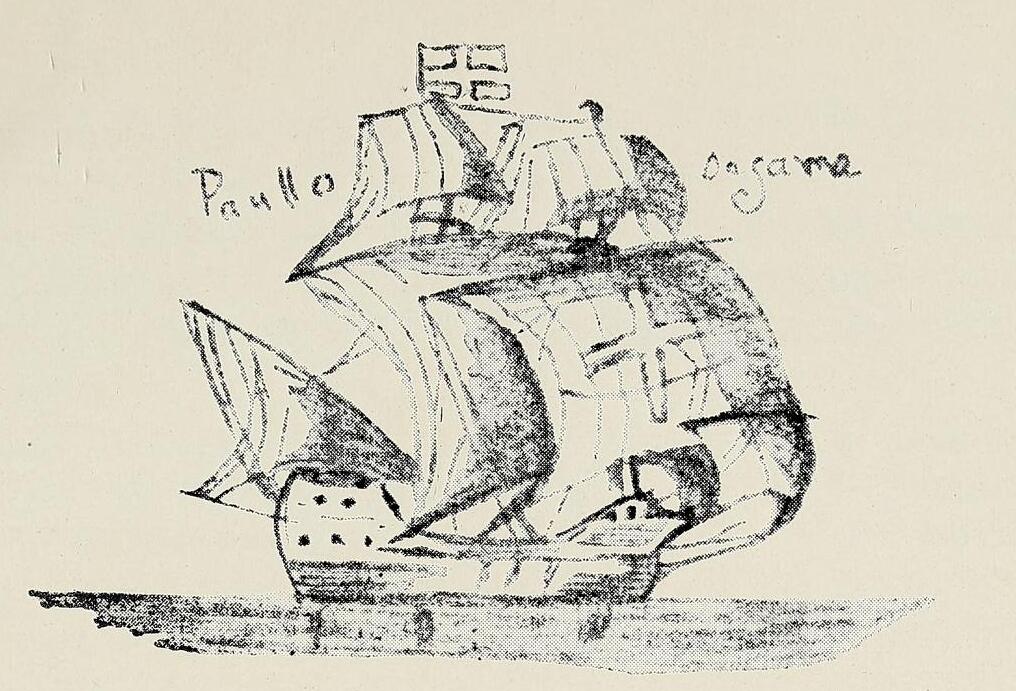
Image: Public domain (16th-century-derived manuscript illustration; reproduction believed public domain due to age, consistent with the companion image SaoGabriel.png from the same series by Visconde de Juromenha) · commons.wikimedia.org
São Rafael (1497 carrack)
Lost — deliberately burned/scuttled off the East African coast (Mozambique/Malindi) in January 1499 due to insufficient surviving crew to man three ships
The São Rafael was one of two purpose-built carracks (naus) in the four-ship fleet that Vasco da Gama led on the first direct European sea voyage to India in 1497-99, opening the Cape Route between Europe and Asia. She was commanded by Paulo da Gama, Vasco da Gama's older brother, with João de Sá serving as scrivener.
Kits of this ship
+ Add a kitNo image | San Rafael (Mini Mamoli) | Mamoli | 1:115 | Solid Hull | Available |
Plans
No plan sets listed for this ship yet. Know of museum, archive or publisher drawings? Add them so the next builder can find them.
Links go to the publisher's or museum's own page. Ship Modelers Database lists plan sets; it doesn't host or display the drawings.
Build logs
+ Link a build logNo build logs linked yet.
Resources
+ Submit a resourceHistory & specifications
- German Wikipedia: São Rafael (Schiff, 1497)Article
Dedicated ship article giving São Rafael's tonnage, crew roster, construction details, and fate; useful for modelers wanting specifics.
- Wikipedia: Portuguese Discovery of the Sea Route to IndiaArticle
Covers the 1497-99 da Gama expedition in which São Rafael sailed, including her role and eventual burning on the return voyage.
- World History Encyclopedia: CarrackArticle
General background on carrack design, construction, and maintenance, with São Gabriel/São Rafael discussed as a famous example of the type.
Museums & archives
- Museu de Marinha: Arcanjo de São RafaelMuseum
Portuguese Navy Museum page on the surviving carved Archangel Raphael figurehead salvaged from the ship, a key relic for modelers researching decorative details.
- The Mariners' Museum: Vasco da Gama (Ages of Exploration)Museum
Museum biography of Vasco da Gama summarizing the 1497 voyage and the fleet's ships, including São Rafael's command and burning.
History
Specifications
Sources give her burden as roughly 90-120 tons (commonly cited as about 100 tons), close in size to her sister ship São Gabriel. She was a three-masted vessel, built under the supervision of Bartolomeu Dias specifically for the expedition and made unusually sturdy to withstand the storms off the Cape of Good Hope, unlike the smaller caravel Berrio, which was a purchased, not purpose-built, vessel.
Service history
The fleet departed Lisbon on 8 July 1497, rounded the Cape of Good Hope, and reached Calicut, India, on 20 May 1498. On the return voyage, disease and scurvy killed roughly half the combined crews, leaving too few men to sail all three remaining ships home; the São Rafael was therefore deliberately burned and abandoned off the East African coast in January 1499, with her surviving crew, including João de Sá, redistributed to the São Gabriel and Berrio.
Notable facts
A carved wooden figurehead of the Archangel Raphael was salvaged from the ship before she was burned; Vasco da Gama reportedly kept it with him on his later voyages in memory of his brother Paulo, who died on the voyage home, and the piece is preserved today at the Museu de Marinha in Lisbon. Contemporary depictions of the São Rafael survive in later copies of 16th-century Portuguese manuscript illustrations, such as those associated with the Livro de Lisuarte de Abreu tradition.