 Ship Modelers Database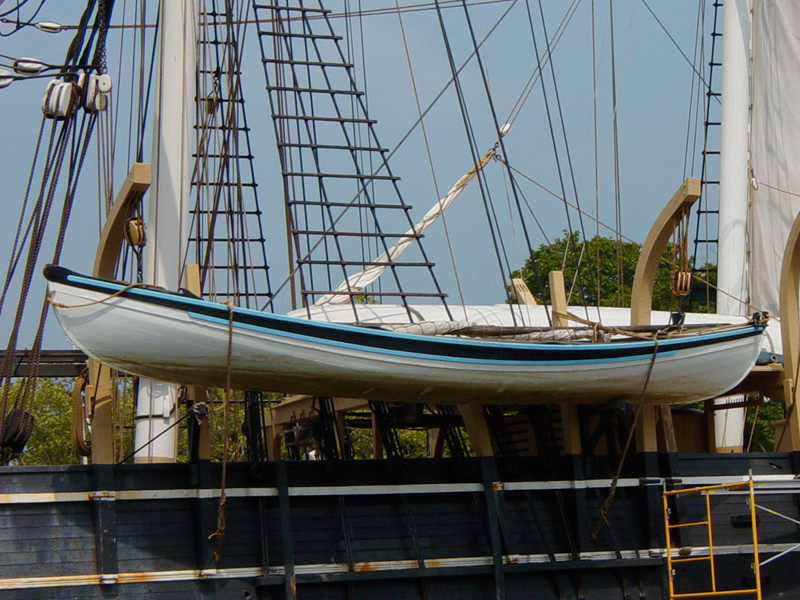
Whaleboat (Generic)
- Type
- Whaler
- Period
- 18th Century
- Nation
- United States
Overview: The whaleboat was not a single named vessel but a generic, mass-produced type — a light, double-ended open boat lowered from a mother whaleship to chase and kill whales by hand. It became the iconic working tool of the American whaling industry, which by the late 18th century was already a major New England enterprise centered on ports like Nantucket and New Bedford. Specifications: Whaleboats were typically around 25-30 feet long, cedar-planked, double-ended (pointed at both bow and stern) for maneuverability in reverse, and light enough for a handful of men to hoist and lower quickly. A whaleship carried three to five of them slung from davits, each crewed by an officer (boatsteerer/harpooner) and five oarsmen, with unusually long oars (16-22 feet) and roughly 1,200 feet of whale line coiled in tubs. Standard gear included a mast and sail, rudder, harpoons ("irons"), killing lances, boat spades, a compass, foghorn, and a keg of drinking water for use if separated from the ship. Service History: Once a whale was sighted, a boat crew rowed or sailed within darting range, the boatsteerer harpooned the animal from the bow, and the whale would tow the boat in a so-called "Nantucket sleighride" until exhausted, at which point the officer moved forward to dispatch it with a hand lance. The dead whale was then towed back to the mother ship for processing. It was dangerous, physically demanding work, and boats were frequently stove in or lost outright during a hunt. Notable Facts: Whaleboats were treated as expendable consumables rather than long-lived vessels — a useful life of no more than about three years was typical, and from 1720 to 1920 roughly 60,000 were used up by the American whaling fleet, with most simply abandoned where they wore out. Consequently only a small number survive today in museum collections, such as the whaleboat displayed at Mystic Seaport Museum (which arrived aboard the whaleship Charles W. Morgan in 1941) and one at the Whaling Museum in Cold Spring Harbor, New York.
Kits of this ship
| New Bedford Whaleboat | Model Shipways | — | Available |
Build Logs
+ Link a build logNo build logs linked yet.
Resources
+ Submit a resource- Mystic Seaport Museum: Whaleboat ExhibitMuseum
Describes the museum's preserved whaleboat (arrived aboard the Charles W. Morgan in 1941), its gear, crew roles, and the mechanics of the whale hunt — useful for modelers wanting rigging and gear detail.
- New Bedford Whaling Museum: Vessels and TerminologyArticle
Covers whaleboat design refinements, davit stowage aboard whaleships, oar lengths, and hull characteristics relevant to scale accuracy.
- The Whaling Museum and Education Center, Cold Spring Harbor (New York Heritage)Museum
Describes a fully-equipped 19th-century whaleboat with original gear on display, one of the few surviving examples, useful as a reference for outfitting detail.
- Whaleboat in davits, Mystic Seaport (Wikimedia Commons)Website
CC-licensed photograph of a preserved historical American whaleboat hanging in davits, useful as a visual reference for hull shape, davit rigging, and proportions.