 Ship Modelers Database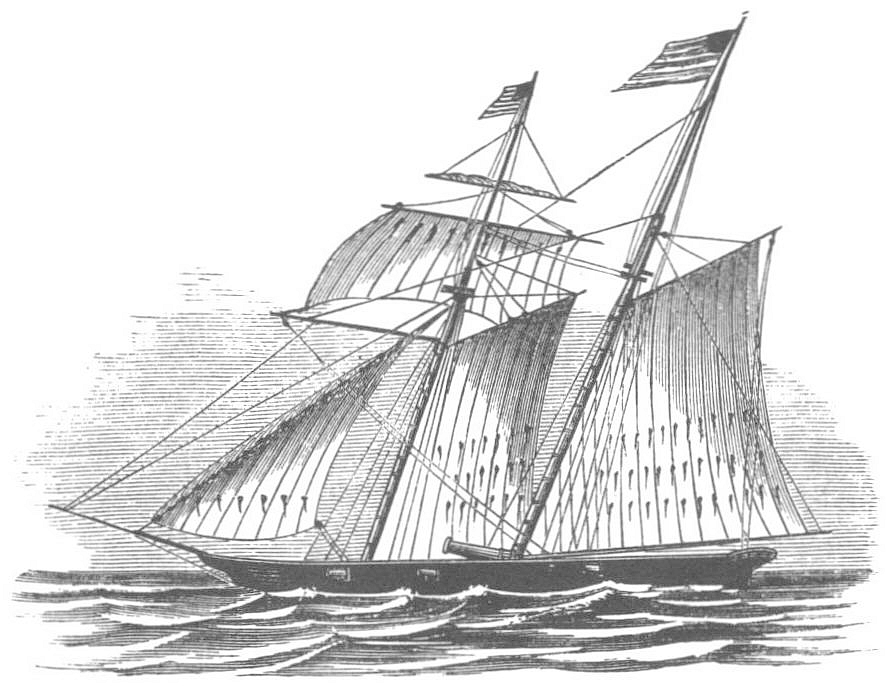
Virginia Built Vessel (Generic)
- Type
- Schooner
- Period
- 18th Century
- Nation
- United States
Overview: "Virginia built" is not a single ship but a generic hull type — fast, sharp-lined small craft (boats, sloops and schooners) built in the Chesapeake Bay region from roughly the mid-18th century onward. It is the direct ancestor of what became known in the early 19th century as the "Baltimore clipper," a type prized for speed and handiness rather than cargo capacity. Development: The type's exact origin is undocumented, but the finer lines, longer run, greater deadrise and increased drag that define it were likely influenced by earlier Bermuda-built sloops and schooners. Fredrik Henrik af Chapman recorded a representative Bermuda sloop hull form in his 1768 treatise Architectura Navalis Mercatoria, a key reference still used by modelers reconstructing these hull shapes. Wikipedia notes that the origins of the type are unknown, but certainly hulls conforming to the concept were being built in Jamaica and Bermuda, with the hull of the ocean-going Bermuda sloop broader than the Jamaican and deeper than the American design. Service History: During the American Revolution these Virginia-built boats, sloops and schooners served widely as privateers, and between 1785 and 1805 the design gained a strong reputation in the British and French navies as dispatch boats and tenders, with French privateers of the type inflicting heavy losses on British shipping. As demand grew, shipbuilders across the wider Chesapeake Bay refined the design further, and it became known as the "Baltimore built boat" or Baltimore clipper. A Baltimore clipper is a fast sailing ship historically built on the mid-Atlantic seaboard of the United States, especially at the port of Baltimore, Maryland, with the name most commonly applied to two-masted schooners and brigantines. Their hull lines tended to be very sharp, with a V-shaped cross section below the waterline and strongly raked stem, stern posts, and masts. Notable Facts: Baltimore clipper-type privateers such as Chasseur made fortunes for their captains during the War of 1812, but the same fast, shallow hulls were also notoriously used in the transatlantic slave trade. No original 18th- or early 19th-century "Virginia built" hull survives; the type's legacy is preserved today mainly through modern sailing reproductions (e.g., Pride of Baltimore II, Lynx) and through contemporary draughts such as the Royal Navy's plans of the captured schooner HMS Berbice.
Kits of this ship
| Katy of Norfolk | Model Shipways | 1:48 (1/4 in=1 ft, O) | Available |
Build Logs
+ Link a build logNo build logs linked yet.