 Ship Modelers Database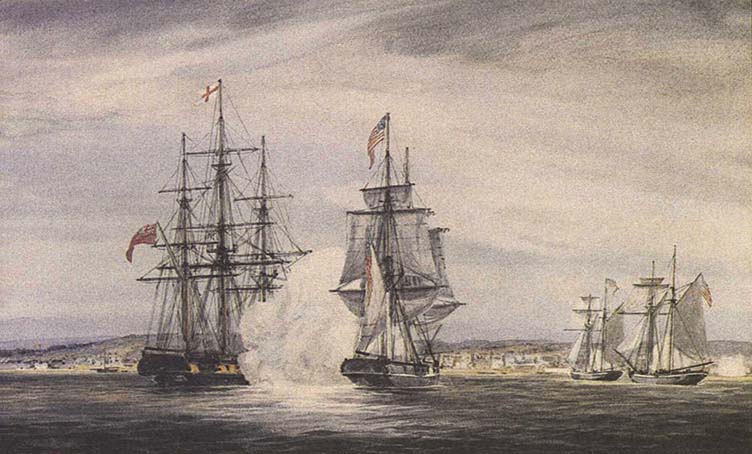
USS Oneida
- Type
- Brig
- Period
- 19th Century
- Nation
- United States
Overview: USS Oneida was a 16-gun brig of war built for the United States Navy on Lake Ontario, and is remembered as the first American warship constructed on the Great Lakes specifically to counter British naval power there. She was laid down in 1808 and launched on 31 March 1809 at Oswego, New York, under a contract between Lieutenant Melancthon T. Woolsey and shipbuilders Henry Eckford and Christian Bergh. A young midshipman named James Fenimore Cooper served under Woolsey during her construction, an experience that later influenced his writing. Specifications: Oneida displaced 243 long tons by carpenter's measurement and carried a complement of about 100 men. She was armed with 16 24-pounder carronades (her original design had also called for a 32-pounder pivot gun forward, though this arrangement was altered). Despite her tonnage, her draft was comparable to an 80-ton sloop, letting her enter the rivers feeding Lake Ontario without grounding; contemporaries nonetheless criticized her sailing qualities as sluggish, especially after ice damage during her first winter afloat. Service History: Commissioned in 1810, Oneida operated principally out of Sackets Harbor, New York, opposite the British base at Kingston. At the outbreak of the War of 1812 she was the only capable U.S. Navy warship on the lake, and on 19 July 1812 she helped repel a British squadron in the First Battle of Sacket's Harbor after her guns were hauled ashore to reinforce shore batteries. She later flew Commodore Isaac Chauncey's broad pennant in a November 1812 chase of HMS Royal George into Kingston harbour, and supported the 1813 landings at York (now Toronto) and Fort George, as well as a 1814 blockade of the Niagara River. Notable Facts: Sold out of naval service in May 1815, Oneida was later repurchased by the Navy, laid up, and finally sold again in 1825 to a timber company at Clayton, New York, where she worked as a timber ship before sinking in French Creek Bay sometime in the 1830s. One of her cannons is preserved today in Clayton's Memorial Park, and one of her anchors is held by the French Creek Bay Marina. Plans for the ship survive in Smithsonian and Howard Chapelle collections and have been used as the basis for scratch-built and kit models (e.g., the Lumberyard's 1:48 kit).
Kits of this ship
| Oneida Plank on Frame Kit | The Lumberyard (dlumberyard.com) | 1:48 (1/4 in=1 ft, O) | Available |
Plans
+ Suggest a plan setNo plan sets listed yet.
Links go to the publisher's or museum's own page. Ship Modelers Database lists plan sets; it doesn't host or display the drawings.
Build Logs
+ Link a build logNo build logs linked yet.
Resources
+ Submit a resource- NHHC DANFS: Oneida I (Brigantine)Museum
Official Navy historical ship entry confirming builders, construction dates, and early service details, useful as an authoritative primary reference.
- USNI: 'A Perfect Slug' - Oneida's Construction and ServiceArticle
Detailed Naval History magazine account of the brig's construction at Oswego, armament, sailing qualities, and combat record, including a profile plan illustration useful for modelers.
- Wikipedia: Engagements on Lake OntarioWebsite
Provides tabulated armament and tonnage data for Oneida in 1813-1814 and context on her role in the Lake Ontario naval campaign.
- Wikipedia: USS Oneida (1809)Website
Overview article with build details, specifications, and a full account of her War of 1812 service and eventual fate.