 Ship Modelers Database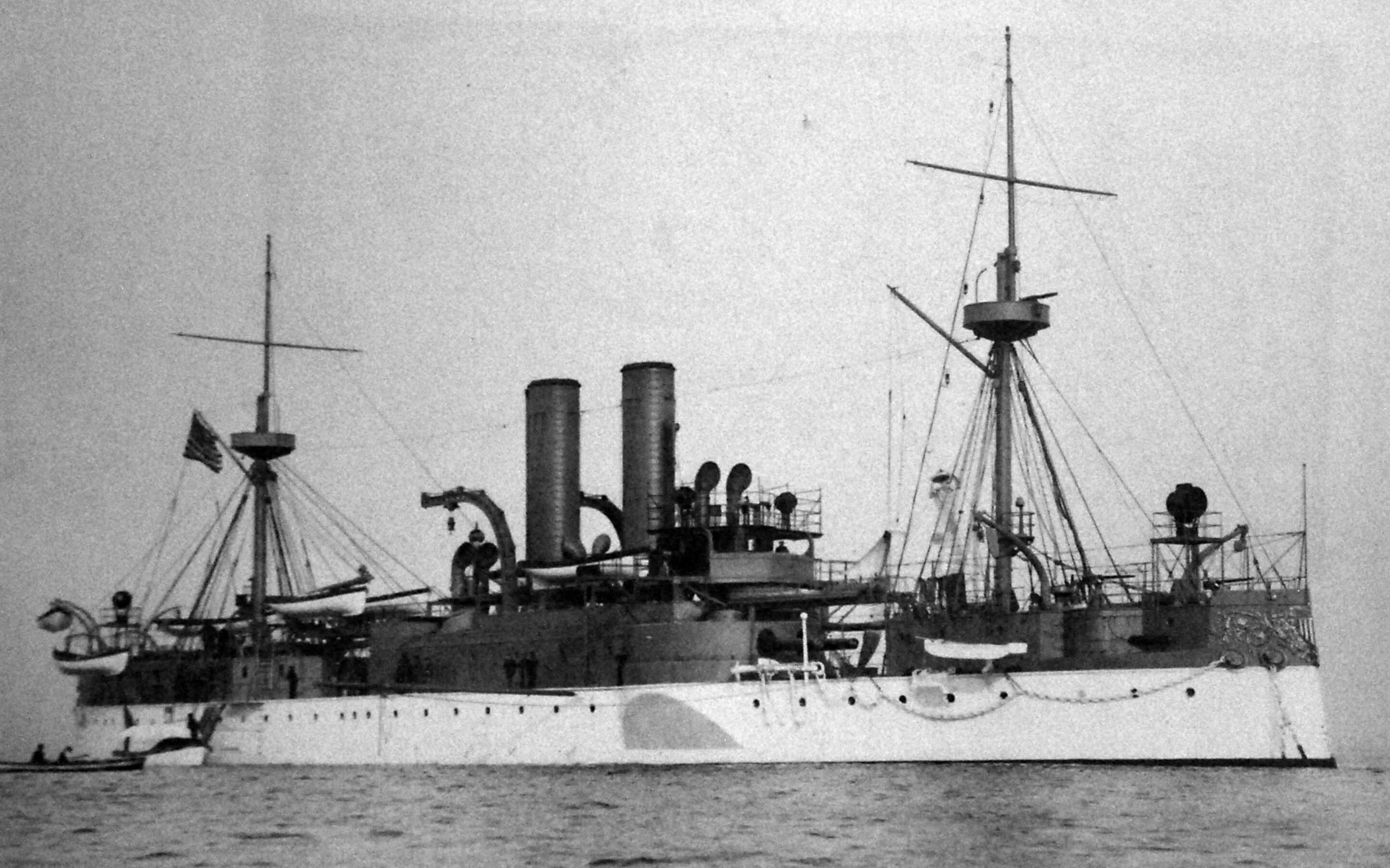
Image: Public domain · commons.wikimedia.org
USS Maine (ACR-1)
Sunk
USS Maine (ACR-1) was a United States Navy second-class battleship, originally designated Armored Cruiser No. 1, whose catastrophic 1898 destruction in Havana Harbor became the catalyst for the Spanish-American War. She was the first U.S. Navy ship to bear the name Maine and, at commissioning, only the second battleship in the fleet.
Kits of this ship
+ Add a kitNo kits listed for this ship yet.
Plans
No plan sets listed for this ship yet. Know of museum, archive or publisher drawings? Add them so the next builder can find them.
Links go to the publisher's or museum's own page. Ship Modelers Database lists plan sets; it doesn't host or display the drawings.
Build logs
+ Link a build logNo build logs linked yet.
Resources
+ Submit a resourceHistory & specifications
- NavSource: Battleship Photo Index, USS MaineWebsite
Photo archive page listing Maine's dimensions, armament, armor, machinery, and fate details useful for scale accuracy.
- NHHC: Battleship Maine and the Spanish-American WarArticle
Detailed NHHC narrative on the Havana deployment, the explosion, the two boards of inquiry, and Rickover's 1976 re-investigation; useful for build-era context and markings.
Museums & archives
- NHHC: USS Maine Photograph Collection EntryMuseum
Official Naval History and Heritage Command summary and photo catalog entry covering Maine's commissioning, Havana deployment, explosion, and 1911-12 salvage/re-sinking.
Photos
- Wikimedia Commons: USS Maine (ACR-1) Starboard Bow View, 1898Photo
Public domain 1898 photograph by J.S. Johnston, courtesy Library of Congress/National Museum of the U.S. Navy, showing hull and superstructure detail useful for modelers.
History
Specifications
Maine displaced about 6,682 tons with an overall length of roughly 324 feet, a beam of 57 feet, and a draught near 22.5 feet. Her main battery consisted of two 10-inch guns in twin turrets staggered en échelon (one sponsoned to starboard forward, one to port aft) so that all four main guns could theoretically bear on either broadside, supplemented by six 6-inch guns, numerous smaller rapid-fire guns, and four torpedo tubes. Armor included a 12-inch belt and up to 8-inch turret plating, and propulsion came from coal-fired boilers driving twin vertical triple-expansion engines for a top speed around 16-17 knots; she dispensed with sailing masts in favor of two observation masts.
Service history
Laid down in 1888 at the New York Navy Yard, launched in 1889, and commissioned in September 1895, Maine spent her active career along the U.S. East Coast and in Caribbean waters. In January 1898 she was sent to Havana to protect American interests during unrest on Spanish-ruled Cuba, and on the evening of 15 February 1898 she was destroyed by a massive explosion in the harbor that killed roughly 260 of her crew.
Notable facts
The cause of the explosion was never conclusively settled: the 1898 Navy court of inquiry blamed an external mine, while later technical reviews—including Admiral Hyman Rickover's 1976 study—argued for an accidental coal-bunker fire igniting an adjacent magazine. The wreck was raised from Havana Harbor in 1911-12, towed out to sea, and deliberately sunk in deep water with military honors; one of her recovered masts now forms the USS Maine Mast Memorial at Arlington National Cemetery, and bronze from her guns was used in the USS Maine National Monument at Central Park in New York City.