 Ship Modelers Database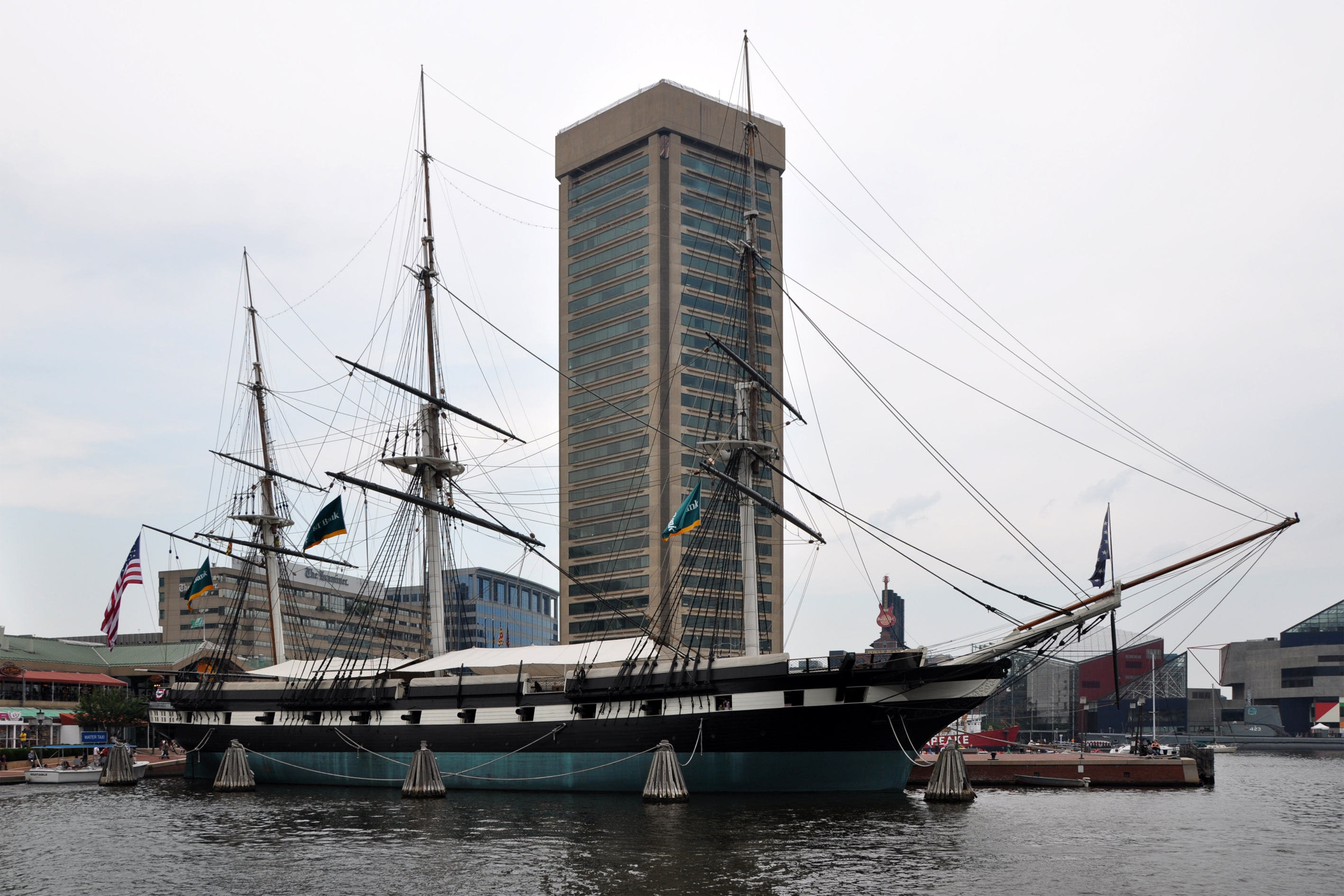
USS Constellation (1854)
- Type
- Sloop of War
- Period
- 19th Century
- Nation
- United States
Overview: USS Constellation (1854) is a sloop-of-war and, per Wikipedia, was the last sail-only warship designed and built by the United States Navy. She was built at Norfolk's Gosport Shipyard and named for the earlier 1797 frigate of the same name, which had been broken up the year construction began; for decades the Navy obscured this distinction, leading to lasting public confusion between the two ships. Specifications: The ship is 181 ft (55 m) long at the waterline and 199 ft (61 m) long overall, with a beam of 41 ft (12 m) at the waterline and 43 ft (13 m) maximum, a draft of 21 ft (6.4 m), and displaces 1,400 long tons. Her armament included 16 x 8 in (203 mm) chambered shell guns, 4 x 32-pounder long guns, a 20-pounder and a 30-pounder Parrott rifle, and 3 x 12-pounder bronze boat howitzers, with a complement of 21 officers and 265 sailors. Notably, though rated a single-gundeck sloop, she is actually larger than her frigate namesake, and more powerfully armed with fewer but much more potent shell-firing guns. Service History: Commissioned in 1855, Constellation performed largely diplomatic duties as part of the U.S. Mediterranean Squadron from 1855 to 1858 before serving as flagship of the Africa Squadron on anti-slavery patrol; at the onset of the Civil War, the Constellation was involved in the U.S. Navy's first capture on May 21, 1861, when she captured a ship known as the "Triton," an illegal slave ship. During the Civil War she returned to the Mediterranean to patrol for Confederate vessels, then returned to the U.S. in late 1864 to be decommissioned, spending the rest of the war out of service before being recommissioned in 1871 for use as a training ship. She continued as a training vessel for midshipmen at Annapolis and Newport for decades afterward. Notable Facts: A long-running historical controversy debated whether the 1854 ship was an entirely new vessel or a rebuild of the 1797 frigate, a dispute fueled by Navy records that for years claimed continuity with the earlier ship; author Geoffrey M. Footner argued in his book that she was in fact the original frigate though greatly modified. Today she is preserved as a museum ship at Pier 1 in Baltimore's Inner Harbor as part of Historic Ships in Baltimore, is a National Historic Landmark, and has undergone extensive ongoing restoration, including refurbishment of her gun deck and berth deck spaces.
Kits of this ship
No kits linked yet.
Build Logs
+ Link a build logNo build logs linked yet.
Resources
+ Submit a resource- Wikipedia: USS Constellation (1854)Website
General overview with full specifications, dimensions, armament, and service dates useful for scale modelers.
- Historic Ships in Baltimore: USS ConstellationMuseum
Official museum site for the preserved ship, covering her history and current status as a visitable museum vessel in Baltimore.
- HNSA Visitors Guide: US Sloop of War ConstellationWebsite
Historic Naval Ships Association guide with precise dimensions and 1862 armament details useful for accurate modeling.
- Explore Baltimore Heritage: USS ConstellationArticle
Local heritage article covering the ship's anti-slavery patrol service and Civil War role.
- Wikimedia Commons: USS Constellation (1854) in Baltimore.jpgWebsite
CC BY-SA 3.0 licensed photograph of the preserved ship as she appears today in Baltimore harbor.