 Ship Modelers Database
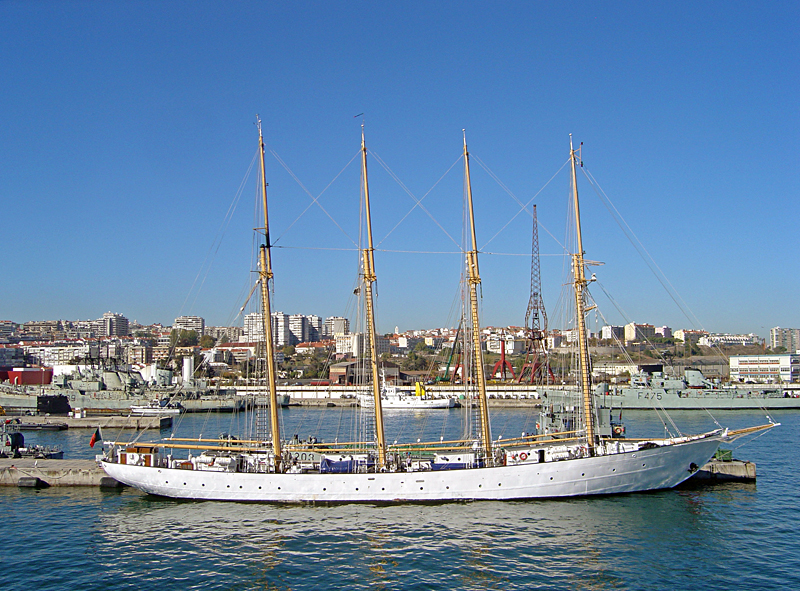
Image: CC BY-SA · commons.wikimedia.org
UAM Creoula
Preserved / In Service (currently laid up undergoing repair)
UAM Creoula (also called NRP or NTM Creoula) is a four-masted gaff schooner (lugre) built in 1937 by the Companhia União Fabril (CUF) shipyards in Lisbon for the Parceria Geral de Pescarias fishing company. She is one of the last survivors of Portugal's historic "White Fleet" of cod-fishing schooners, sister ship to the Santa Maria Manuela, and is now operated by the Portuguese Navy as a sail training vessel.
Kits of this ship
+ Add a kitNo kits listed for this ship yet.
Plans
No plan sets listed for this ship yet. Know of museum, archive or publisher drawings? Add them so the next builder can find them.
Links go to the publisher's or museum's own page. Ship Modelers Database lists plan sets; it doesn't host or display the drawings.
Build logs
+ Link a build logNo build logs linked yet.
Resources
+ Submit a resourceHistory & specifications
- Portuguese Wikipedia: UAM Creoula (UAM201)Website
More detailed Portuguese-language article covering construction, conversion to training ship, and current lay-up status at Alfeite Naval Base.
- Sail Training International: CREOULA vessel profileWebsite
Class A tall ship registry entry with hull dimensions and a short history of her fishing and training careers.
- Wikipedia: UAM CreoulaWebsite
English-language overview with key dimensions, armament-free specifications, and service history useful for modelers.
Museums & archives
- Marinha Portuguesa: A História - NTM CreoulaMuseum
Official Portuguese Navy history page for the ship with construction, fishing campaign, and conversion details straight from the operator.
History
Specifications
As built she displaced roughly 894 long tons light and 1,300 long tons full load, with an overall length of about 67.4 m, a beam of 9.9 m, and masts towering to about 36 m. She was built in 1937 in the Companhia União Fabril (CUF) shipyards in Lisbon, with an IMO number of 5081918 and callsign CTEL. Her hull was given reinforced bow construction so she could operate in the icy fishing grounds off Newfoundland and Greenland, and she carries both sail and a diesel auxiliary engine.
Service history
From 1937 to 1973 she was used in a total of 37 cod fishing campaigns in Newfoundland and Greenland, for a total of 300,000 nautical miles. Between 1973 and 1979 she remained moored in Lisbon before being bought by the Secretariat of State for Fisheries to become a fishing museum; during the repairs it was noticed the hull was in excellent condition, so it was decided she should sail again, and she was converted into a Portuguese Navy training ship in 1987. Since then she has carried thousands of young civilian trainees to sea on training cruises under the Portuguese flag.
Notable facts
As of the most recent reporting she is laid up at the Alfeite Naval Base, unable to sail due to a lack of operational condition, and has been undergoing repair/maintenance since 2017, with little public information on the cause of the delay or an expected completion date. Her coat of arms consists of two silver cod fish on an azure field under a granny knot, a direct nod to her origins as a Newfoundland codfishing schooner — a nice heraldic detail for a modeler wanting an accurate nameboard or flag.