 Ship Modelers Database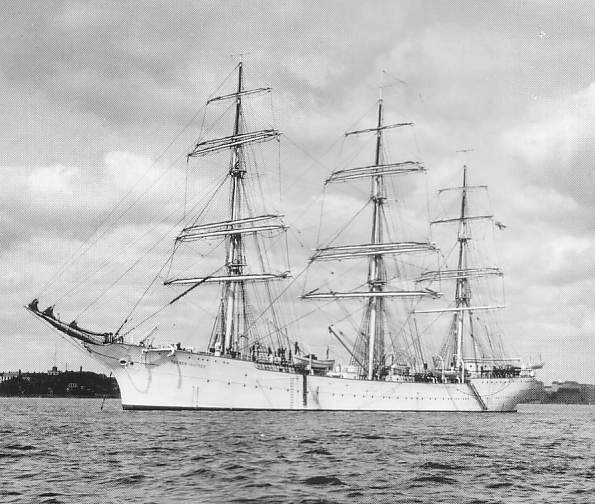
Image: Public domain · commons.wikimedia.org
Suomen Joutsen
Preserved museum ship, permanently moored at Forum Marinum in Turku, Finland since 1991
Suomen Joutsen ("Swan of Finland") is a steel-hulled, three-masted full-rigged ship built in 1902 at the Chantiers de Penhoët yard in Saint-Nazaire, France, originally named Laënnec. She passed through French and German ownership (renamed Oldenburg in 1922) before Finland purchased her in 1930 to serve as a sail training ship for the Finnish Navy. Technically she is a full-rigged ship (all three masts square-rigged) rather than a true barque, though she is often grouped with the Baltic's famous barques such as Pommern.
Kits of this ship
+ Add a kitNo kits listed for this ship yet.
Plans
No plan sets listed for this ship yet. Know of museum, archive or publisher drawings? Add them so the next builder can find them.
Links go to the publisher's or museum's own page. Ship Modelers Database lists plan sets; it doesn't host or display the drawings.
Build logs
+ Link a build logNo build logs linked yet.
Resources
+ Submit a resourceHistory & specifications
- Wikipedia: Suomen JoutsenWebsite
Comprehensive history and technical specifications covering the ship's French, German and Finnish service, useful for dimensions and rigging details for a scale model.
Photos
- Wikimedia Commons: Category Suomen Joutsen (ship, 1902)Photo
Collection of historical photographs of the ship from various years, including structured data on dimensions and build details, useful for visual reference.
- Wikimedia Commons: File Suomen Joutsen 1932.jpgPhoto
Public domain 1932 photograph of the ship anchored off Kruunuvuori, Helsinki, usable as a reference image for modelers.
History
Specifications
As built she measured 96 m overall length, 80 m at the waterline, with a 12.3 m beam and 7.29 m depth to main deck; her masts rose 52 m from the waterline. As a school ship she carried 2,200 m² of sail (reduced from an original 2,807 m²) and could accommodate up to 180 men, supplemented by two Skandia hot-bulb engines of 200 hp each driving twin screws — an unusual twin-shaft arrangement for the era. She was lightly armed during WWII with only two machine guns and around 40 rifles.
Service history
Under the Finnish flag Suomen Joutsen completed eight long international training voyages between 1931 and 1939, visiting ports across the Atlantic, Mediterranean, Caribbean and South America, and rounding Cape Horn on one voyage. During World War II she served as a moving supply depot for the Archipelago Sea Fleet and later as a minesweeper support and accommodation ship. From 1961 she operated as a stationary seamen's school in Turku before becoming a public museum ship in 1991.
Notable facts
The ship's nickname among Finns was "Ankka" (The Duck). She survived WWII largely intact apart from minor shrapnel damage from Soviet air raids, and in the 1930s her Rio de Janeiro visit earned her the Portuguese nickname "Cisne Blanco de Finlandia." She underwent major drydock restorations in 1998, 2006 and 2016 to keep her seaworthy as a static museum exhibit in Turku, moored near the wooden barque Sigyn.