 Ship Modelers Database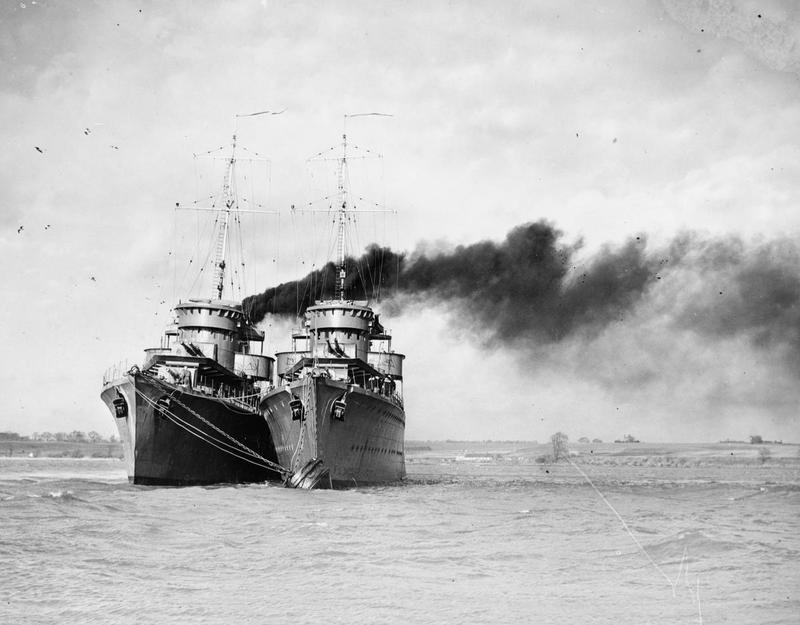
Image: Public domain (UK Crown Copyright expired / IWM Non-Commercial Licence, Imperial War Museums collection) · commons.wikimedia.org
ORP Grom (1936)
Sunk — lost 4 May 1940 near Narvik, Norway; wreck never raised, first explored by divers in 1986.
ORP Grom was the lead ship of the Polish Navy's Grom-class destroyers, built by J. Samuel White at Cowes, England, and commissioned in 1937. Nation of origin is Poland (not listed among the constrained nation options, hence "Other"); she was designed and constructed in Great Britain for Polish service. She and her sister ORP Błyskawica were conceived as oversized, heavily armed destroyers to compensate for Poland's lack of cruisers.
Kits of this ship
+ Add a kitNo kits listed for this ship yet.
Plans
No plan sets listed for this ship yet. Know of museum, archive or publisher drawings? Add them so the next builder can find them.
Links go to the publisher's or museum's own page. Ship Modelers Database lists plan sets; it doesn't host or display the drawings.
Build logs
+ Link a build logNo build logs linked yet.
Resources
+ Submit a resourceHistory & specifications
- Navypedia: Grom-class Destroyers (1937)Article
Detailed technical data table and design/project history useful for modelers checking dimensions and armament.
- Wikipedia: ORP Grom (1936)Website
General overview, specifications, and service history including her sinking at Narvik.
- WW2DB: Destroyer GromWebsite
Summary specification sheet and operational timeline with photographs of Grom.
Museums & archives
- National Maritime Museum: 1:50 Scale Builder's Model of Grom (1936)Museum
Museum object page for the original shipyard builder's model, useful reference for hull form and fittings.
History
Specifications
Grom displaced 1,975 tons standard (up to 2,400 tons full load), was 114 m (374 ft) long overall with an 11.3 m beam and 3.3 m draught. Two Parsons geared steam turbines delivering 54,000 shp drove her to 39 knots, exceptionally fast for a destroyer of her era. Armament comprised seven 120 mm Bofors guns, twin 40 mm and 13.2 mm AA weapons, six torpedo tubes, depth charges, and the capacity to lay 44 mines.
Service history
Grom escaped to Britain under the "Peking Plan" on 30 August 1939, just before the German invasion of Poland, rendezvousing with Royal Navy destroyers and operating thereafter as an Allied convoy escort. During the Norwegian Campaign in spring 1940 she became notorious for aggressively harassing German shore positions around Narvik. On 4 May 1940, while conducting naval gunfire support in the Rombaken fjord, she was hit by bombs from a Heinkel He 111 and sank with heavy loss of life after an internal explosion, reportedly triggered when a bomb struck her loaded midship torpedo tubes.
Notable facts
A 1:50 scale builder's model of Grom, made by J. Samuel White's own shipyard modelmakers, survives in the National Maritime Museum, Greenwich collection, complete with its original case and plaque — a useful reference for hull and fitting detail. A Polish-Norwegian war memorial to sailors lost at Narvik stands in a Narvik park named "Groms plass" in the ship's honor.