 Ship Modelers Database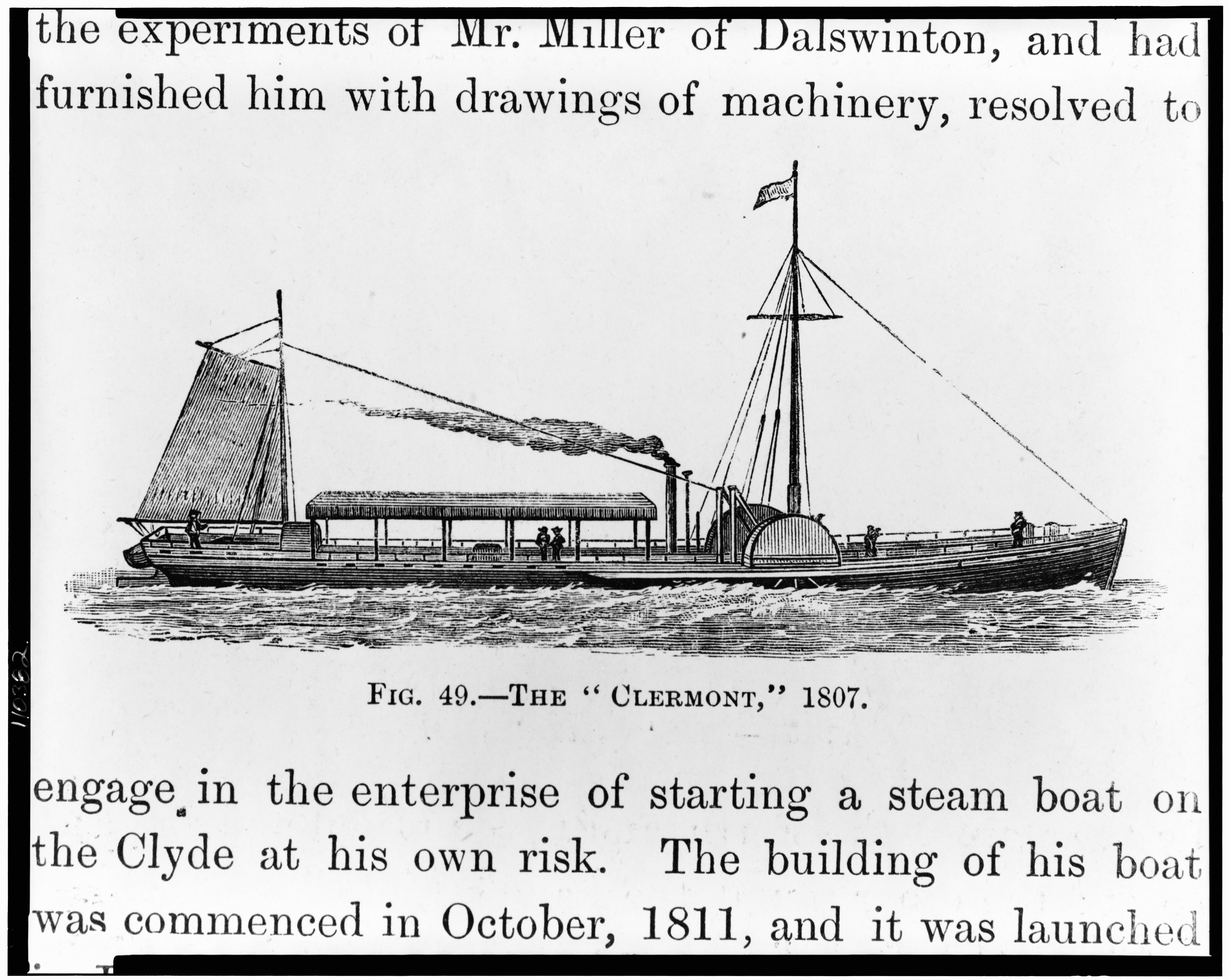
North River Steamboat (Clermont)
- Type
- Steamboat
- Period
- 19th Century
- Nation
- United States
Overview: The North River Steamboat, popularly but somewhat inaccurately known as the Clermont, was built in 1807 by Robert Fulton and financier Robert Livingston and is widely regarded as the world's first commercially viable steam vessel, running on the Hudson River between New York City and Albany. Specifications: Sources vary slightly on dimensions; Wikipedia lists a length of 142 ft, beam of 18 ft, height of 62 ft, and draught of 7 ft with a displacement around 121 tons, while Britannica gives a smaller hull of 133 feet long and 12 feet wide with a 2-foot draft. The vessel was propelled by a roughly 19 hp steam engine built by Boulton and Watt in England, driving two side paddle wheels each about 15 feet in diameter, and it also carried auxiliary sail rigging, with a top speed around 4.3-4.7 knots. Service History: On its maiden voyage beginning August 17, 1807, the steamboat covered the roughly 150 miles from New York City to Albany in about 32 hours, averaging close to 5 mph, proving steam navigation commercially practical. Livingston held an exclusive New York State monopoly on steam navigation on the Hudson, and the two men built the vessel to exploit that monopoly with regular passenger service; the ship, renamed North River, remained in service until 1814 and was ultimately scrapped. The Livingston-Fulton Hudson River monopoly was later struck down by the U.S. Supreme Court in the landmark 1824 case Gibbons v. Ogden. Notable Facts: The ship is popularly nicknamed both "Clermont" (after Livingston's estate) and derisively "Fulton's Folly" by skeptics before its success was proven. A full-scale, carefully researched replica was built for the 1909 Hudson-Fulton Celebration; that later, separate vessel was preserved for some years as a moored museum attraction before eventually being lost to fire. For modelers, the Lindberg company has long produced a 1/96 scale kit of the vessel, and multiple 19th-century engravings and diagrams of its paddle-wheel drivetrain and machinery survive as useful reference material, including period wood engravings such as the one used here.
Kits of this ship
No kits linked yet.
Build Logs
+ Link a build logNo build logs linked yet.
Resources
+ Submit a resource- Library of Congress: Fig. 49 -- the Clermont, 1807 (Galloway engraving)Museum
Public-domain 1881 wood engraving showing a broadside view of the steamboat, useful as a historical reference image with confirmed no known publication restrictions.
- Wikimedia Commons: Category Clermont (ship, 1807)Website
Collection of period engravings, diagrams of the machinery/drivetrain, and photos of the 1909 replica useful for modeling reference.
- Wikipedia: North River SteamboatWebsite
Overview article with infobox specifications, history, and background on Fulton and Livingston's partnership.
- Britannica: Clermont (steamboat)Article
Encyclopedia entry giving alternate dimensions and engine details, useful for cross-checking specs.
- Hudson River Valley Institute: SteamboatWebsite
Historical context on the Livingston-Fulton Hudson River monopoly and the Clermont bicentennial exhibit, including references to period paintings.
- Wikimedia Commons: North River or Clermont 1807.jpgMuseum
Period illustration of the North River Steamboat/Clermont under sail and steam, licensed for reuse, useful as a visual reference for modelers.