 Ship Modelers Database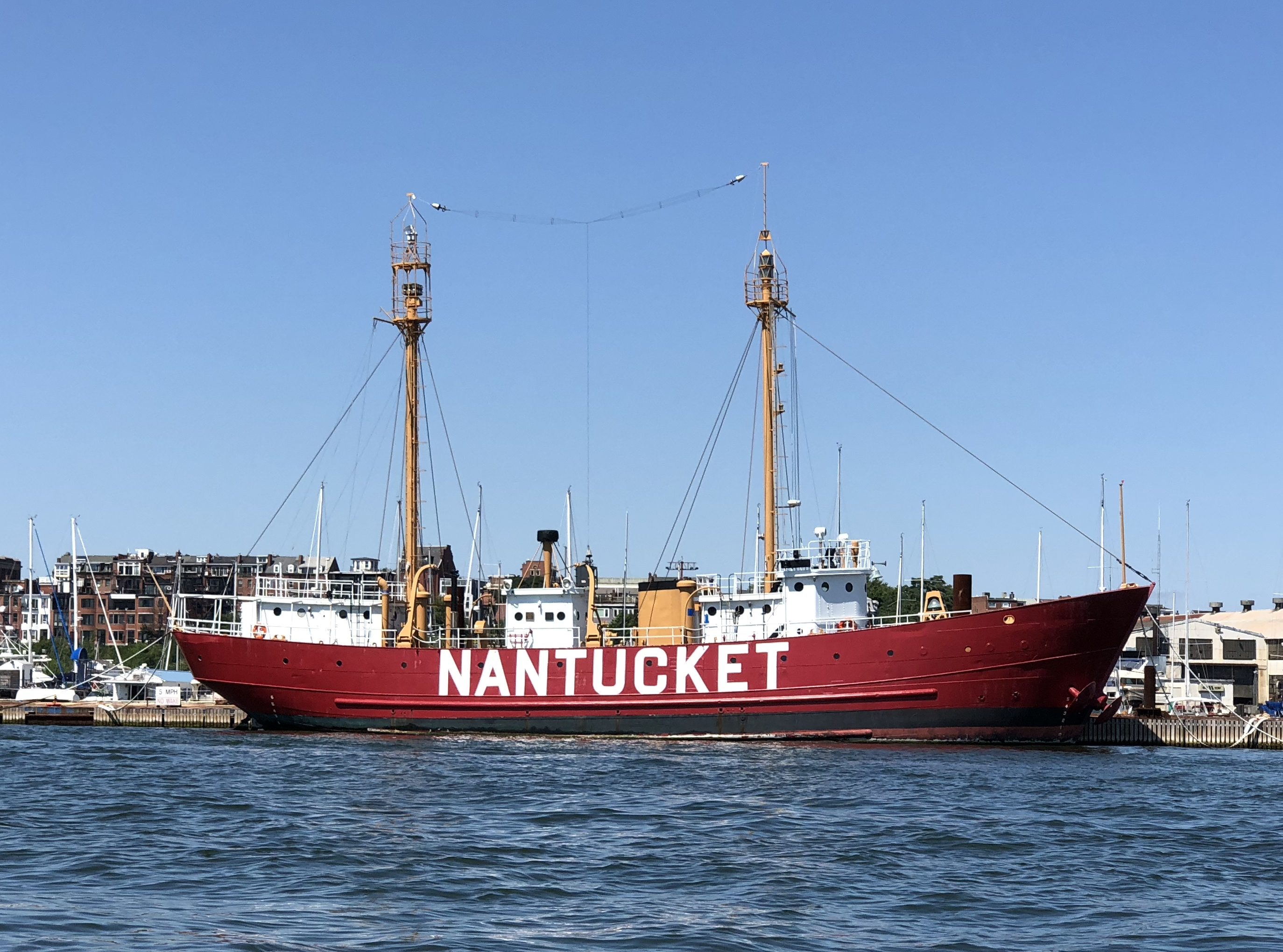
Nantucket (LV-112)
- Type
- Lightvessel
- Period
- 20th Century
- Nation
- United States
Overview: Nantucket (LV-112) is a steel-hulled United States lightvessel that marked the treacherous Nantucket Shoals station, guiding transatlantic shipping in and out of Boston and New York for decades. She was designated a National Historic Landmark and is preserved today as a museum ship in Boston, making her a well-documented subject for scale modelers seeking an unusual "floating lighthouse" subject rather than a warship or merchantman. Specifications: Built by Pusey and Jones of Wilmington, Delaware and launched in 1936, she has a length overall of 148 ft 10 in (45.36 m), beam of 32 ft (9.8 m), draft of 16 ft 3 in (4.95 m), and displaces 1,050 tons, making her the largest lightship ever built in the United States. She was originally steam-powered with 2 boilers driving a 600 i.h.p. reciprocating engine (1936-1960), later re-engined with a 900 h.p. diesel (1960-), giving a speed of 12 knots. During World War II she briefly carried a single 3-inch (76 mm) gun (1942-1945) in place of her usual unarmed lightship configuration. Service History: LV-112 was built specifically to replace LV-117, which had been sunk in a collision while assigned to Nantucket Shoals, and her construction incorporated heavy compartmentalization and reinforcement to prevent a repeat tragedy. She served almost exclusively at the Nantucket station, apart from wartime duty in 1942-1945 and a stint as 1st District relief vessel in 1958-1960; during WWII she was repainted gray, armed, and patrolled the coast off Portland, ME, rescuing the crew of the USS Eagle-56 after she was sunk by a German U-boat. She served as the lightship for such notable vessels as the liners United States, Queen Mary, and Normandie before being withdrawn from Nantucket station in 1975 and decommissioned by the Coast Guard. Notable Facts: After decommissioning, ownership and location changed hands several times, and the ship fell into serious disrepair; by 2009 she was in very poor condition and about to be scrapped when purchased for one dollar by preservationist Bob Mannino. The nonprofit United States Lightship Museum restored her and towed her back to her original homeport of Boston in 2010, where a 2014 American Express National Treasures grant funded rebuilding of the vessel's navigational light beacon, foghorn and electrical systems, allowing her signals to operate again. She is nicknamed the "Statue of Liberty of the Sea" for being the first and last U.S. landmark seen by ships traveling to and from Europe, and her fog signal and light beacon ranges (14 and 23 miles respectively) are distinctive features for modelers to note.
Kits of this ship
| Nantucket (LV 112) | BlueJacket Shipcrafters | 1:96 (1/8 in=1 ft) | Available |
Build Logs
+ Link a build log- NANTUCKET LIGHTSHIP - 1:95 scale by LINDBERGNino · Ships of Scale
Multi-page build log of the Lindberg 1:95 Nantucket Lightship kit discussing historical accuracy details like radar and stack changes.
- 1959 Pyro NANTUCKET LIGHTSHIP 1/96 [COMPLETED BUILD]Frankie Day · Ships of Scale
Completed build thread of the vintage 1959 Pyro/ITC Nantucket Lightship kit at 1/96 scale, with builder photos shared.
Resources
+ Submit a resource- Nantucket Wikidpedia pageWikipedia Entry
- National Trust for Historic Preservation: Nantucket Lightship/LV-112Article
Covers the ship's National Treasure status, WWII rescue of USS Eagle-56 crew, and restoration history.
- Lighthouse Friends: Lightship Nantucket LV 112/WAL 534Website
Detailed technical and service history including propulsion, dimensions, and wartime service.
- Wikimedia Commons photo: Lightship Nantucket in Boston Harbor, 2018Website
Free-licensed photograph of the preserved vessel useful for modelers referencing current appearance and paint scheme.
- Wreckhunter: Nantucket Lightship LV-112Article
Background on the lightship station history, the 2009 near-scrapping, and restoration effort.