 Ship Modelers Database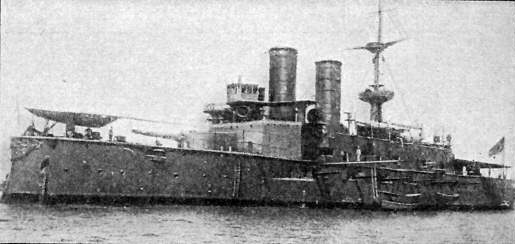
Mesudiye
- Type
- Ironclad
- Period
- 19th Century
- Nation
- Ottoman Empire
Overview: Mesudiye was a central-battery ironclad of the Ottoman Navy, one of the largest ships of that type ever built, and for a time one of the most powerful warships in the world. She was built by the Thames Iron Works in Britain and later rebuilt as a pre-dreadnought-type battleship in Genoa, Italy, giving her a distinctive two-era profile that modelers can render either as the original three-masted casemate ironclad or the rebuilt single-mast configuration. Specifications: As built, she displaced about 8,938 metric tons, measured 101.02 m long with a 17.98 m beam and 7.9 m draft, and was armed with twelve 10-inch RML guns plus three 7-inch RML guns, protected by up to 305 mm of belt armor. After her 1903 reconstruction she displaced roughly 9,120 tons, could reach 17 knots on new triple-expansion engines, and carried a mixed battery of 150 mm, 76 mm, 57 mm and 47 mm guns (the intended 230 mm turret guns were never fitted). Service History: In the aftermath of the Crimean War, where an entire Ottoman squadron was destroyed by a Russian fleet at Sinop, the Ottoman Empire began a naval construction program, limited primarily by the chronically weak Ottoman economy, and several ironclads were ordered in the 1860s and 1870s, primarily from British and French shipyards. Mesudiye was poorly maintained for most of her career, including a twenty-year gap between the Russo-Turkish War of 1877–1878 and the Greco-Turkish War of 1897, and was in very poor condition by the late 1890s, prompting a major reconstruction into a pre-dreadnought design in Genoa. She saw extensive action during the First Balkan War of 1912–1913, including the battles of Elli and Lemnos, and during the latter engagement was badly damaged by a Greek shell and forced to withdraw. Following the outbreak of World War I in 1914, Mesudiye was moored at Nara to protect the Dardanelles minefields, and on the morning of 13 December the British submarine HMS B11 passed through the minefields and torpedoed her. Notable Facts: Mesudiye had one sister ship, though she was purchased by the Royal Navy and commissioned as HMS Superb. Most of her crew survived the sinking, and many of her guns were salvaged and used to strengthen the Dardanelles defenses; a shore battery named Mesudiye in her honor helped sink the French battleship Bouvet in March 1915. She was designed by Edward James Reed and was the largest central-battery warship ever constructed, with wrought iron belt and battery armour up to 12 inches thick.
Kits of this ship
No kits linked yet.
Build Logs
+ Link a build logNo build logs linked yet.
Resources
+ Submit a resource- MaSS: Mesudiye (+1914) shipwreck recordWebsite
Maritime archaeology database entry covering the ship's rebuild details, armament, and final anchorage location in the Dardanelles.
- Wikipedia: Ottoman ironclad MesudiyeArticle
Detailed history, specifications (both as-built and after 1903 rebuild), and service record including her sinking in 1914.
- Wikimedia Commons: Category Mesudiye (ship, 1875)Museum
Collection of period photographs, illustrations, and archival images of the ship useful as visual reference for modelers.