 Ship Modelers Database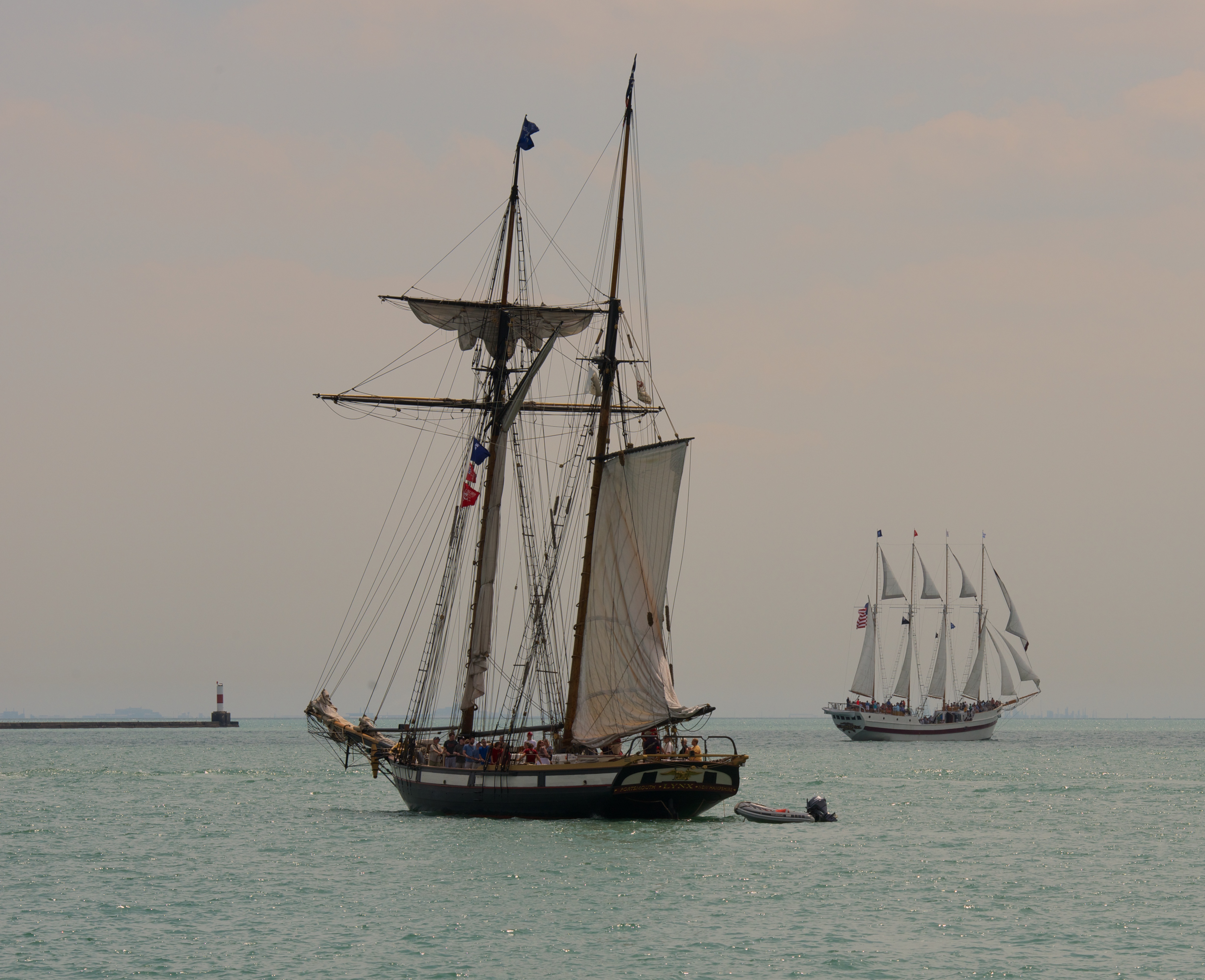
Lynx
- Type
- Schooner
- Period
- 19th Century
- Nation
- United States
Overview: Lynx was a Baltimore Clipper-type topsail schooner built in 1812 at Fells Point, Baltimore, by master shipwright Thomas Kemp, one of many fast privateers and letters of marque commissioned in the opening days of the War of 1812 to evade the Royal Navy's blockade. She is historically notable both for her brief but dramatic wartime career and for having been thoroughly documented by British naval draughtsmen after capture, which preserved her lines for posterity. Specifications: The original Lynx was built on the sharp, V-hulled Baltimore Clipper model with a strongly raked stem and masts, rigged as a two-masted topsail schooner. Sources vary slightly on her dimensions, with the Royal Navy's own record giving her as roughly 97.5 feet long, 24 feet in beam, and about 224 tons burthen, armed with six 12-pounder long guns and carrying a crew of 40. The 2001 sailing replica is somewhat smaller, measuring 122 feet sparred length, 76 feet on deck, 23 feet beam, and 8.5 feet draft, with a displacement of about 99 long tons. Service History: Lynx was commissioned on 14 July 1812 under Captain Elisha Taylor and completed one successful voyage running the Royal Navy blockade. On her second voyage in 1813 she was captured by a large British blockading fleet near the Rappahannock River and taken into Royal Navy service as HMS Mosquidobit, later serving against France at the close of the war. She was sold out of naval service in January 1820 into commercial/private ownership; Wikipedia notes that nothing further is definitively known of her fate thereafter, though some popular accounts describe her being lost with all hands in a Jamaica hurricane that same year. Notable Facts: Because the Royal Navy dismantled and drew the captured Lynx in exacting detail, her hull lines survived in British archives and became the basis for the modern full-scale replica. That replica was designed by Melbourne Smith and built by Taylor Allen and Eric Sewell of Rockport Marine in Rockport, Maine, launching on 28 July 2001; she now operates as a sail-training and living-history museum vessel, most recently homeported in Nantucket, Massachusetts. A contemporary scale model of the ship as HMS Musquidobit is preserved in a British collection, and the Smithsonian's National Museum of American History also holds material related to the original vessel, both useful references for modelers seeking documented lines and details.
Kits of this ship
| Lynx Baltimore Schooner (Art. 745) | Mantua Model Ships | — | Available |
Build Logs
+ Link a build logNo build logs linked yet.
Resources
+ Submit a resource- Wikipedia: Lynx (tall ship)Article
Overview of the 2001 replica's design, builders, dimensions, and its relationship to the original 1812 privateer; useful baseline dimensions for modeling the replica.
- Wikipedia: HMS Mosquidobit (ex-Lynx)Article
Detailed service history of the original Lynx/HMS Mosquidobit including builder, owners, armament, dimensions, and disposal in 1820; primary reference for the historical vessel's specifications.
- Smithsonian NMAH: Letter of Marque Topsail Schooner LynxMuseum
Smithsonian curatorial notes on Lynx's status as a letter-of-marque vessel, her capture, and how the Royal Navy's recording of her hull lines preserved her design for posterity.
- Wikimedia Commons: Tall Ship Lynx photographWebsite
Free-use photograph of the modern Lynx replica under sail, useful as a visual reference for hull lines, rigging, and sail plan.