 Ship Modelers Database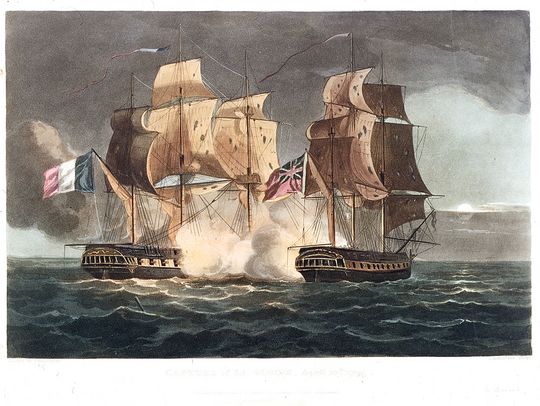
La Gloire
- Type
- Frigate
- Period
- 18th Century
- Nation
- France
Overview: La Gloire was a 32-gun Iphigénie-class frigate of the French Navy, one of nine sister ships (seven to the original Guignace design plus two related units) built in the late 1770s at the Lorient and Saint-Malo dockyards. She was designed by shipbuilding engineer Léon-Michel Guignace and built at Saint-Malo, entering service at the very end of the American Revolutionary War period. Specifications: The Iphigénie class carried 32 guns, typically 26 x 12-pounder long guns plus 6 x 6-pounder long guns, with some ships later fitted with additional 36-pounder obusiers de vaisseau (carronade-type howitzers). The class had a length of roughly 44.2 m, a beam of about 11.2 m, a burthen of 620 tonneaux and a full displacement near 1,150 tonneaux. A popular scale-kit rendition (Mamoli/Dusek "La Gloire," 1:90) depicts her in her first year of service with a white-painted (uncoppered) hull, noting that the underwater hull was sheathed in copper the following year for protection against fouling and corrosion. Service History: Gloire was laid down in January 1778, launched 9 July 1778 at Saint-Malo, and completed that October. She served through the 1780s and into the French Revolutionary Wars before being intercepted and captured after a hard-fought action by the British frigate HMS Astraea on 10 April 1795 in the English Channel; taken into Royal Navy service as HMS Gloire, she was subsequently sold out of service in 1802. Notable Facts: Modelers should be careful about naming overlap - the French Navy reused the name "Gloire" for at least fifteen different vessels between the 17th and 20th centuries, including a later 44-gun frigate of 1803 (also captured by the British and broken up in 1812) and the far more famous 1859 ironclad battleship Gloire. This 1778 Iphigénie-class ship is the one depicted by the well-known Mamoli/Dusek "La Gloire" 1:90 scale sailing-frigate kit commonly built by ship modelers. Her capture by the smaller but determined HMS Astraea was commemorated in period British marine art, including an aquatint by Thomas Whitcombe of the action.
Kits of this ship
No kits linked yet.
Build Logs
+ Link a build logNo build logs linked yet.
Resources
+ Submit a resource- Wikipedia: French frigate Résolue (1778) — Iphigénie-class sister ship specificationsWebsite
Gives detailed class-wide specifications (dimensions, armament, tonnage) shared by all Iphigénie-class frigates including Gloire.
- Wikipedia: List of French sail frigatesWebsite
Confirms Gloire's launch date (9 July 1778 at Saint-Malo) and capture date (10 April 1795) within the Iphigénie class listing.
- Military Wiki: French ship Gloire (disambiguation)Website
Lists all fifteen French Navy vessels named Gloire, useful for modelers to avoid confusing this 1778 frigate with later ships of the same name.
- Wikimedia Commons: Painting of HMS Astraea and GloireMuseum
Public-domain historical painting depicting the 10 April 1795 action in which Gloire was captured by HMS Astraea; used as the reference image for this record.
- Wikipedia: HMS Astraea (1781)Website
Details the British frigate that captured Gloire on 10 April 1795, corroborating the action date and outcome.
- Model Expo: Dusek/Mamoli MV34 La Gloire 1:90 kit listingWebsite
Manufacturer product description confirming the kit's depiction of Gloire's first year of service with an uncoppered white hull, relevant to modelers building this kit.