 Ship Modelers Database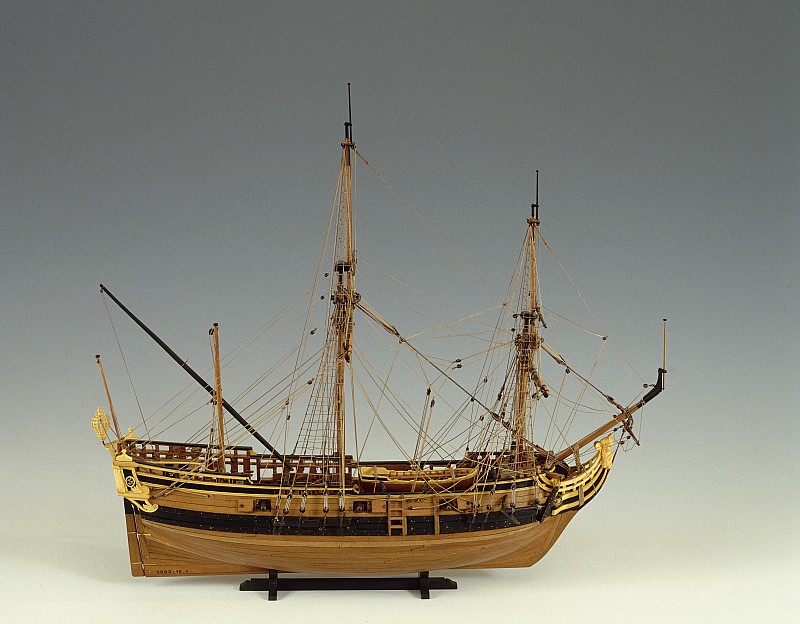
La Belle (1684)
- Type
- Barque Longue
- Period
- 17th Century
- Nation
- France
Overview: La Belle was the smallest of four ships King Louis XIV granted to explorer René-Robert Cavelier, Sieur de La Salle for his 1684 expedition to found a French colony near the mouth of the Mississippi River. Navigational errors led the fleet 400 miles west of its target, and La Belle ultimately became the expedition's last surviving vessel before it too was lost, an event that helped doom the colony and opened the door for Spain to reassert control over Texas. Specifications: La Belle was built as a barque longue, a light, maneuverable three-masted French naval type of the late 17th century, roughly midway between an armed storeship and a small frigate — there is no dedicated "barque longue" category in most modeling type lists, so it is best treated as its own distinctive small-craft type rather than shoehorned into frigate or sloop categories. Wikipedia's technical data give her a tonnage of 40-45, a length of 54 ft 4 in (16.56 m), a beam of 14 ft 9 in (4.50 m), and a draft of about 8 ft (2.4 m); she carried a handful of iron and bronze guns (period accounts and excavation finds include 4-pounders and a swivel gun) with a rig of two square sails each on the main and foremasts, a triangular sail on the mizzen, and a small square sail on the bowsprit. Service History: La Salle's fleet departed La Rochelle in July 1684 with about 300 colonists; one ship was captured by Spanish privateers en route, and after missing the Mississippi delta the remaining vessels landed near Matagorda Bay in early 1685, where the storeship L'Aimable was lost entering the bay. La Belle survived that entry, but in a storm in the winter of 1686 she ran aground and sank in the bay's southern end, stranding the remaining colonists and precipitating the colony's collapse and La Salle's murder by his own men soon after. Notable Facts: La Belle's wreck lay buried in mud for over 300 years until Texas Historical Commission divers located it in 1995, confirmed by bronze cannon bearing French royal insignia; a cofferdam excavation in 1996-97 recovered the hull and roughly a million artifacts, including trade beads, muskets, swords, and pistols intended for the colony. Texas A&M's Conservation Research Laboratory spent about 17 years cleaning and reassembling the timbers, which modelers may find interesting were marked with Roman numerals for assembly, since the ship was partly meant to be knocked down and reassembled in the New World; a formal agreement between France, the Musée national de la Marine, and Texas allows the reconstructed hull to remain permanently on display at the Bullock Museum even though La Belle is still legally considered a French sovereign vessel. Image Note: The image on file is a Wikimedia Commons profile illustration/reconstruction drawing of La Belle showing her hull form and rig as a barque longue, rather than a period painting or a photo of the excavated hull; it is licensed under CC BY-SA. An alternative Commons image (Belle_hull.jpg, also CC BY-SA 3.0) shows the actual conserved hull fragment as displayed, and Théodore Gudin's 19th-century painting "La Salle's Expedition to Louisiana in 1684" (public domain) depicts La Belle alongside the fleet's other two ships, if a different image style is preferred.
Kits of this ship
No kits linked yet.
Build Logs
+ Link a build logNo build logs linked yet.
Resources
+ Submit a resource- Wikimedia Commons: La Belle, barque longue, 1684, vue de profilWebsite
Free-licensed profile illustration showing the reconstructed appearance of the barque longue rig, useful reference for modelers.
- Bullock Museum: Excavating and Conserving La BelleMuseum
Details the Texas A&M Conservation Research Laboratory's 17-year conservation process for the hull timbers and artifacts.
- Bullock Texas State History Museum: La Belle Press KitMuseum
Official museum page describing the permanent exhibit, hull reconstruction, and display arrangement with France/Musée national de la Marine.
- Wikipedia: La Belle (ship)Website
Overview article with infobox dimensions, rig description, and service history useful for scale drawings.
- Wikimedia Commons: Belle hull.jpgMuseum
CC BY-SA 3.0 photograph of the excavated hull remains, a direct visual reference for hull shape and timber layout.
- Texas A&M Nautical Archaeology Program: La Belle ProjectArticle
Describes the excavation, hull disassembly/reassembly process, and the ship's construction markings, valuable for build accuracy.
- Texas Historical Commission: La Salle Archeology ProjectsArticle
Official state agency summary of the 1996-97 excavation and finds recovered from the wreck.
- Bob Bullock Texas State History Museum: La Belle Shipwreck ExhibitMuseum
Museum page on the permanent exhibit housing the conserved hull, useful for current display context and provenance.