 Ship Modelers Database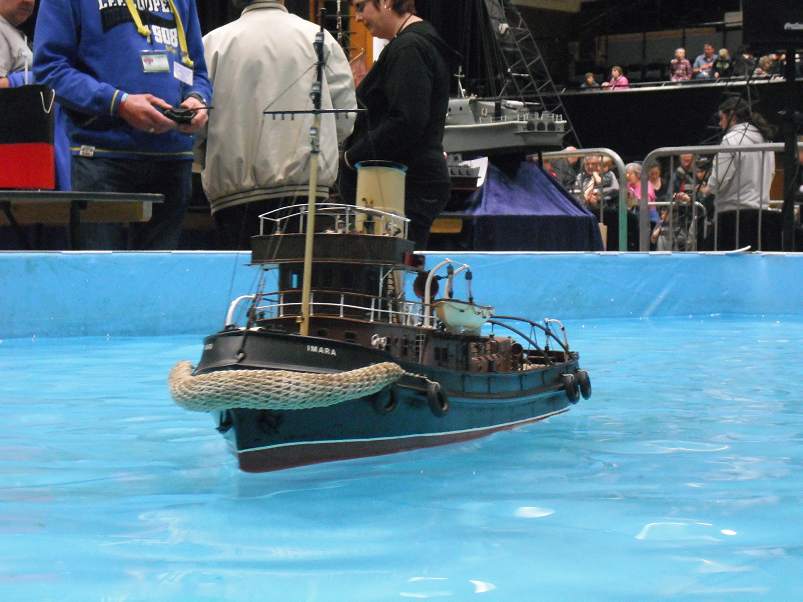
Image: CC BY 2.0 (via Flickr, Wikimedia Commons) · commons.wikimedia.org
Imara (tugboat)
Scrapped
Imara was a twin-screw harbour tug built in 1931 by Fleming & Ferguson of Paisley, Scotland, under a Crown Colonies contract for service at Dar-es-Salaam in what was then British Tanganyika. She is best known today as the real-world subject of the detailed Caldercraft (Jotika) 1:32 scale radio-control model kit, which is popular among advanced modelers.
Kits of this ship
+ Add a kitNo kits listed for this ship yet.
Plans
No plan sets listed for this ship yet. Know of museum, archive or publisher drawings? Add them so the next builder can find them.
Links go to the publisher's or museum's own page. Ship Modelers Database lists plan sets; it doesn't host or display the drawings.
Build logs
+ Link a build logNo build logs linked yet.
Resources
+ Submit a resourcePhotos
- Wikimedia Commons: Category Imara (tugboat, 1931)Photo
Confirms the ship's name, type, and 1931 build year, and hosts the only known free-licensed photo of the vessel.
- Wikimedia Commons: Ships built at Fleming & Ferguson, PaisleyPhoto
Identifies the Scottish shipyard that built Imara, useful for modelers researching construction style and builder plans.
- Wikimedia Commons: Ships scrapped in 1960Photo
Confirms the vessel's final disposition/fate as scrapped in 1960.
History
Specifications
As built she was a conventional riveted-steel colonial harbour tug of the interwar type, with a single funnel, enclosed wheelhouse, and twin-screw propulsion. The Caldercraft model kit reproduces her at 1105 mm length and 292 mm width (1:32 scale), with options for single- or twin-screw versions, the latter requiring roughly 1,400 individual parts.
Service history
Imara served as a civilian harbour tug in the Crown Colonies, assisting shipping at Dar-es-Salaam in East Africa. She later entered Royal Navy service, where she was renamed Perseverance; she was eventually scrapped in 1960.
Notable facts
Imara's design is considered broadly representative of the many small harbour tugs built by British yards for colonial ports between the two World Wars, which is part of why Caldercraft chose her as a kit subject intended to evoke the "Crown Colonies" era of British maritime history.