 Ship Modelers Database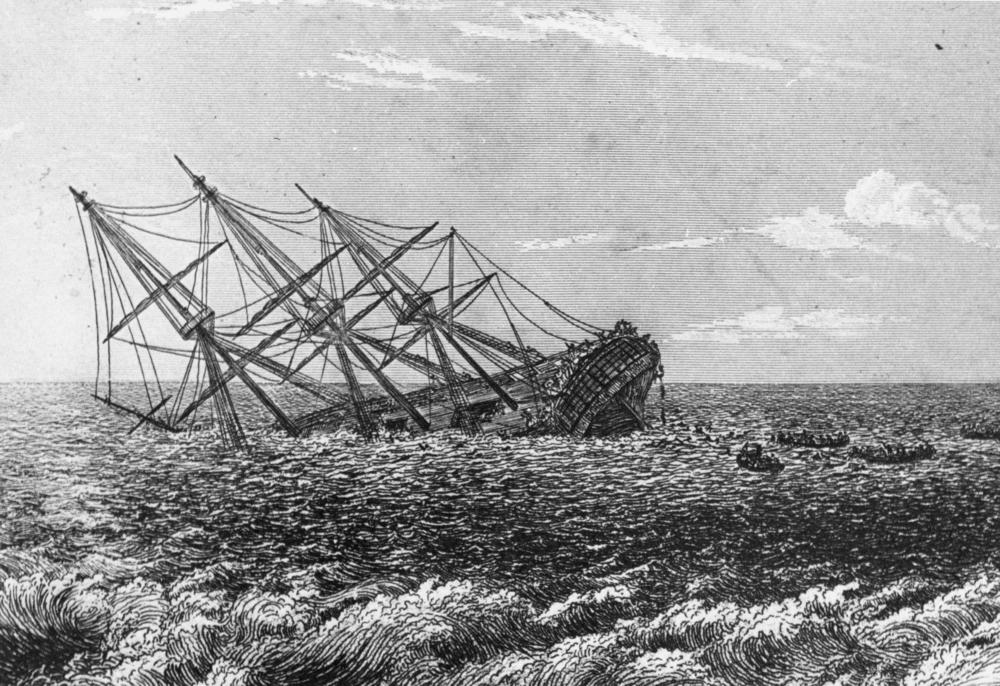
HMS Pandora (1779)
- Type
- Frigate
- Period
- 18th Century
- Nation
- Great Britain
Overview: HMS Pandora was a Royal Navy sixth-rate frigate best remembered for being sent in 1790 to hunt down the Bounty mutineers in the South Pacific. She is a favorite modeling subject due to her fame and the detailed archaeological data recovered from her wreck. Specifications: She was a 24-gun Porcupine-class post ship/frigate, launched in May 1779, built by Adams and Barnard at Deptford. Sources describe her as roughly 500 tons burthen with a crew that varied between about 120 and 134 men; for her Pacific voyage she left Portsmouth with 135 men aboard. For that voyage she was refitted with four 18-pounder carronades while her complement of 9-pounder long guns was reduced to twenty. Service History: Pandora first served in the Channel during the 1779 invasion scare and later as a convoy escort in North American waters during the American Revolutionary War, taking part in the capture of several American privateers under Captain Anthony Parry. After the war she was laid up in ordinary before being recommissioned in 1790 amid the Nootka Crisis, then dispatched under Captain Edward Edwards to find HMS Bounty and arrest the mutineers, departing Portsmouth on 7 November 1790 and reaching Tahiti in March 1791. Having captured fourteen of the mutineers and searched fruitlessly for Fletcher Christian's group, she struck the Great Barrier Reef on 29 August 1791 and sank the next day, with the loss of 31 crew and 4 prisoners (accounts of the total dead range up to 35). Notable Facts: The captured mutineers were held in a cramped deck cage nicknamed "Pandora's Box." Her wreck was discovered in 1977 and has since been excavated by the Queensland Museum across nine seasons between 1979 and 1999, recovering thousands of artefacts including ship fittings, weapons, surgeon's tools, and Polynesian ethnographic items, making it one of the best-preserved and most studied historic shipwrecks in the Southern Hemisphere. Roughly a quarter to a third of the hull is believed to remain intact, buried on the seabed after excavation seasons concluded. The ship is the subject of a detailed "Anatomy of the Ship" reference title, The 24-Gun Frigate HMS Pandora by John McKay and Ron Coleman, widely used by scale modelers, and a 1:48 scale plank-on-frame model is held by the Australian National Maritime Museum.
Kits of this ship
No image | 1/72 PoB HMS Pandora 1779 Royal Navy Frigate Kit | Modelship Dockyard | 1:72 | Available |
Build Logs
+ Link a build logNo build logs linked yet.
Resources
+ Submit a resource- Australian National Maritime Museum: HMS Pandora model recordMuseum
Describes a 1:48 scale plank-on-frame model of Pandora and summarizes the wreck's discovery and preservation, useful reference for modelers building the ship.
- Wikimedia Commons: File:HMS Pandora.jpgWebsite
Public domain historical engraving depicting HMS Pandora foundering, after a sketch by Peter Heywood, suitable as a reference image.