 Ship Modelers Database
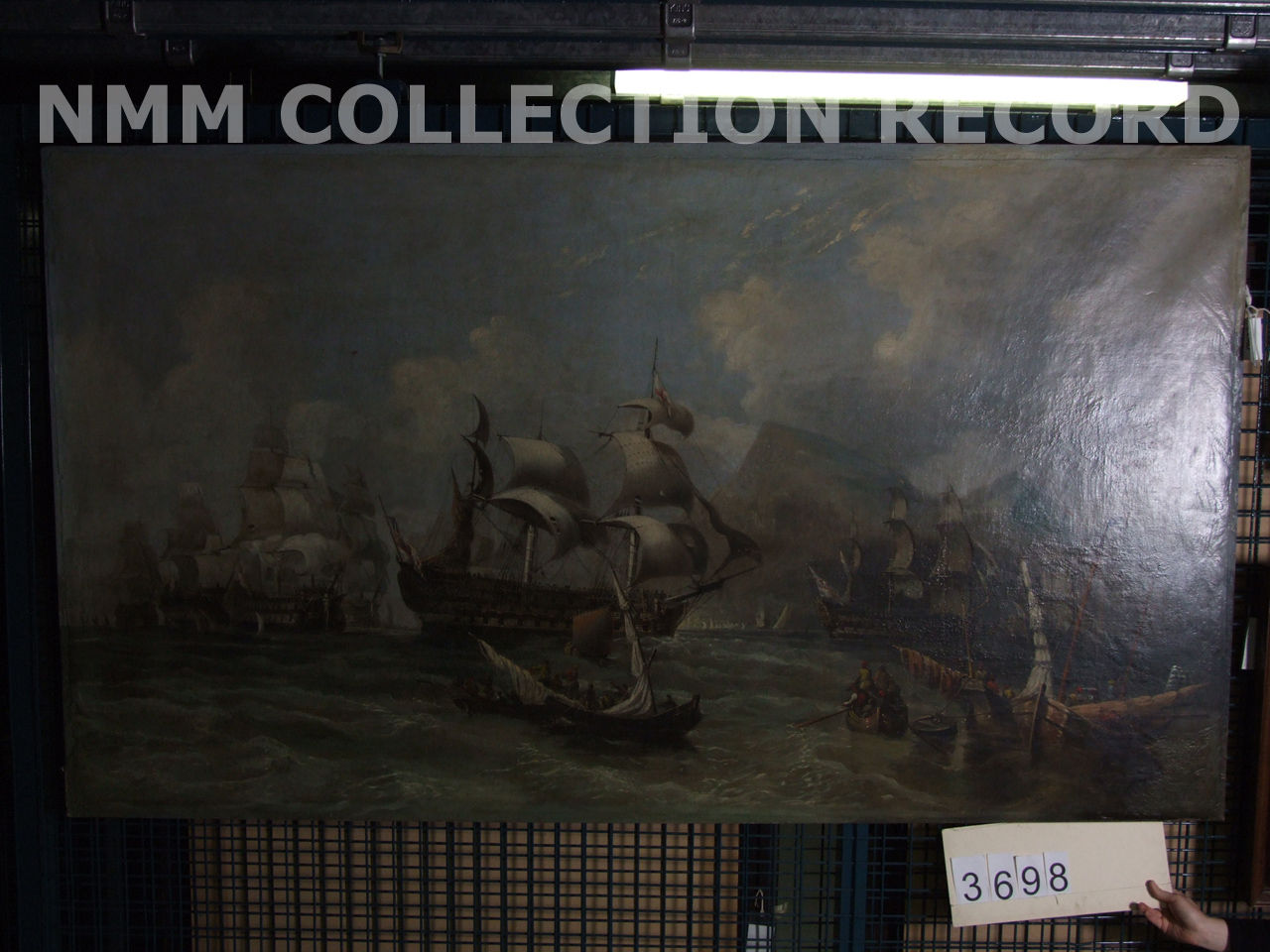
Image: Public domain · commons.wikimedia.org
HMS Neptune (1797)
Broken up in 1818
HMS Neptune was a 98-gun second-rate ship of the line of the Royal Navy, lead ship of the three-vessel Neptune class designed by Surveyor of the Navy Sir John Henslow. She is best remembered for her prominent role at the Battle of Trafalgar in 1805, where she sailed immediately astern of Nelson's Victory in the weather column.
Kits of this ship
+ Add a kitNo image | HMS Neptune 1796 Capstan Model – 1:24 Scale Mini Kit | Portland Scale Model Company | 1:24 (1/2 in=1 ft) | Other | Available |
No image | HMS Neptune 1796 Capstan Model – 1:24 Scale Mini Kit | Portland Scale Ship Co. | 1:24 (1/2 in=1 ft) | Other | Available |
Plans
No plan sets listed for this ship yet. Know of museum, archive or publisher drawings? Add them so the next builder can find them.
Links go to the publisher's or museum's own page. Ship Modelers Database lists plan sets; it doesn't host or display the drawings.
Build logs
+ Link a build logNo build logs linked yet.
Resources
+ Submit a resourceHistory & specifications
- Three Decks: British Second Rate Neptune (1797)Website
Detailed technical dimensions, armament by year, crew complement, commanders list, and a chronological service history log.
- Wikipedia: HMS Neptune (1797)Article
Comprehensive service history including construction, the Nore mutiny, Mediterranean service, Trafalgar, and later West Indies career.
- Wikipedia: Neptune-class Ship of the LineArticle
Design and class details including dimensions, armament, and sister ships Temeraire and Dreadnought, useful for comparative modeling.
Plans & drawings
- Royal Museums Greenwich: Neptune (1797) Ship PlanPlans
1:48 scale Admiralty draught showing body plan, sheer lines, and stern decoration, directly useful for scratch-building or kit-bashing accuracy.
History
Specifications
Built at Deptford Dockyard, she measured 185 feet (56 m) on the gundeck with a 51-foot (16 m) beam and 21-foot (6.4 m) depth of hold, on a burthen of roughly 2,110 tons. Her armament comprised 28 x 32-pounders on the lower gundeck, 30 x 18-pounders on the middle gundeck, 30 x 18-pounders (later reduced to 12-pounders) on the upper gundeck, plus 8 x 12-pounders on the quarterdeck and 2 x 12-pounders on the forecastle, for a full complement of around 738-750 men.
Service history
Ordered in 1790 and launched on 28 January 1797, Neptune was almost immediately caught up in the Nore mutiny, being one of the loyal ships tasked with intercepting mutinous vessels before the crisis collapsed. She served with the Channel Fleet and then Lord Keith's Mediterranean fleet through the French Revolutionary Wars, and after refitting took part in the blockade of Cadiz leading up to Trafalgar. At Trafalgar she helped batter the French flagship Bucentaure and engaged the giant Spanish Santísima Trinidad, sustaining nine shot holes and the loss of ten killed and 34 wounded; afterward she towed the disabled HMS Victory into Gibraltar. She later served in the West Indies, taking part in the 1809 invasion of Martinique and the action against Troude's squadron, before ending her days as a prison ship and being broken up at Plymouth in October 1818.
Notable facts
Despite her fighting record, Neptune had a reputation among her officers as a notoriously poor sailer — one captain grumbled about being stuck in "a large ship that don't sail," though midshipmen recorded she unexpectedly outperformed herself on the morning of Trafalgar. Her captain at Trafalgar, Thomas Francis Fremantle, had hoped to take the position of honour directly astern of Victory. A well-documented contemporary oil painting by William Stuart (held at Royal Museums Greenwich, BHC3698) depicts Neptune towing the battered Victory into Gibraltar after the battle, giving modelers a useful period reference for her rig and hull after battle damage.