 Ship Modelers Database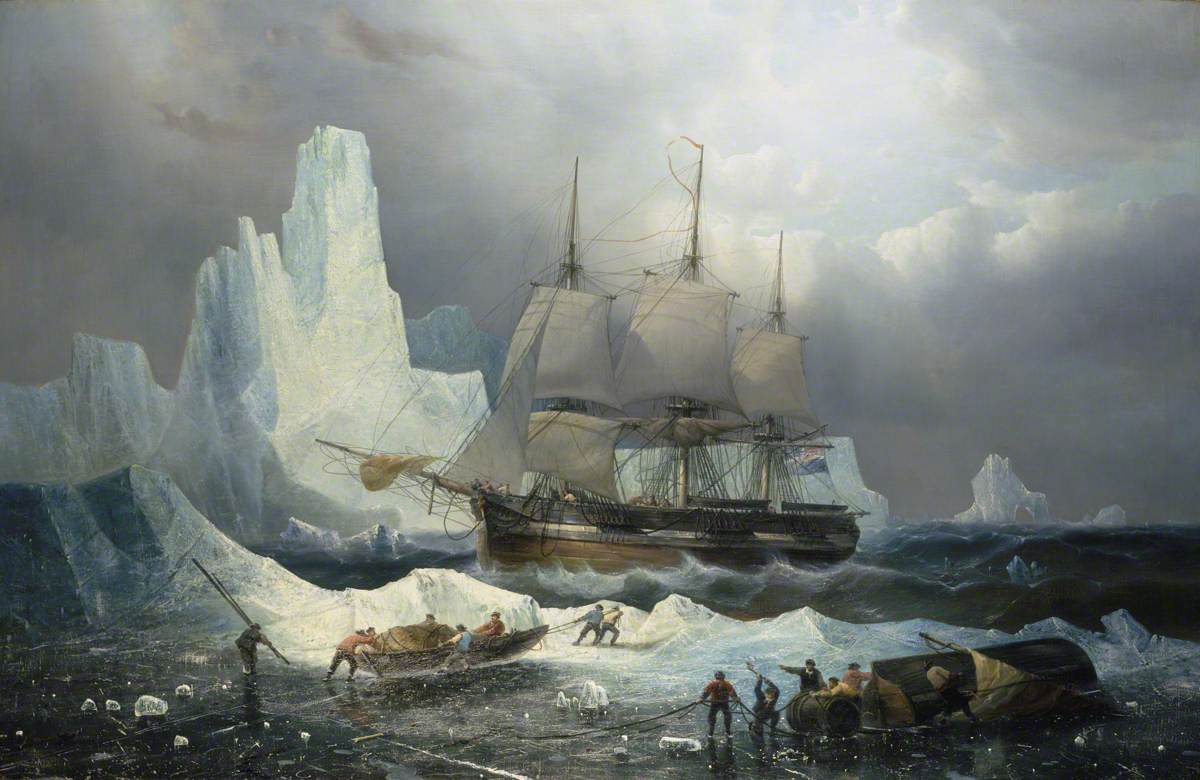
HMS Erebus (1826)
- Type
- Bomb Vessel
- Period
- 19th Century
- Nation
- Great Britain
Overview: HMS Erebus was a Hecla-class bomb vessel built for the Royal Navy, later famous as one of the two ships (with HMS Terror) used on James Clark Ross's Antarctic expedition and then as flagship of Sir John Franklin's ill-fated 1845 Northwest Passage expedition, on which she was lost with all hands. The wreck's 2014 discovery renewed enormous public and modeling interest in the ship. Specifications: Built at Pembroke Dockyard, Wales, and launched on 7 June 1826, she measured 105 ft in length by 29 ft beam, with a burthen of 372 tons and a displacement of about 715 long tons. As built she carried one 13-inch and one 10-inch mortar plus 8 x 24-pounder and 2 x 6-pounder guns; for the Franklin expedition she was fitted with a locomotive-derived steam engine (30 nominal horsepower) driving a two-bladed propeller, an extended stern, reinforced upper-deck planking, and iron sheathing along the bow and waterline for ice protection. Service History: After Mediterranean service as a bomb vessel, Erebus was refitted for exploration and, under Ross, sailed to Antarctica from 1839-1843, discovering the Ross Ice Shelf and having Mount Erebus named after her. In 1845 she departed England under Franklin's command to complete a crossing of the Northwest Passage but became icebound in Victoria Strait; she was abandoned by her crew on 22 April 1848 near King William Island, and all hands were eventually lost. Notable Facts: The wreck was located on 2 September 2014 in Wilmot and Crampton Bay, and the site is now designated the Wrecks of HMS Erebus and HMS Terror National Historic Site of Canada. A well-known contemporary depiction, "HMS Erebus in the Ice, 1846" by François Étienne Musin, hangs in the National Maritime Museum, Greenwich, and is a useful visual reference for modelers depicting her ice-strengthened Arctic configuration.
Kits of this ship
No kits linked yet.
Build Logs
+ Link a build logNo build logs linked yet.
Resources
+ Submit a resource- Wikipedia: HMS Erebus (1826)Website
Overview article with full specifications, service history, and fate of the ship.
- Royal Museums Greenwich: HMS Terror and Erebus - the story of Franklin's lost expeditionMuseum
Museum narrative covering both ships' careers and the Franklin expedition, useful historical context for modelers.
- Linda Hall Library: Scientist of the Day - HMS ErebusArticle
Article discussing period engravings and paintings of Erebus, useful for identifying visual references.
- Wikimedia Commons: HMS Erebus in the Ice, 1846 (Musin painting)Museum
Public-domain digitization of the 1846 Musin painting of Erebus in Arctic ice, held by the National Maritime Museum, Greenwich; useful reference image for her ice-fitted appearance.
- Royal Museums Greenwich: HMS Erebus 1:48 full hull block modelMuseum
Museum catalog entry for a contemporary 1:48 scale full hull model of Erebus, directly relevant to scale modelers seeking dimensional accuracy.