 Ship Modelers Database
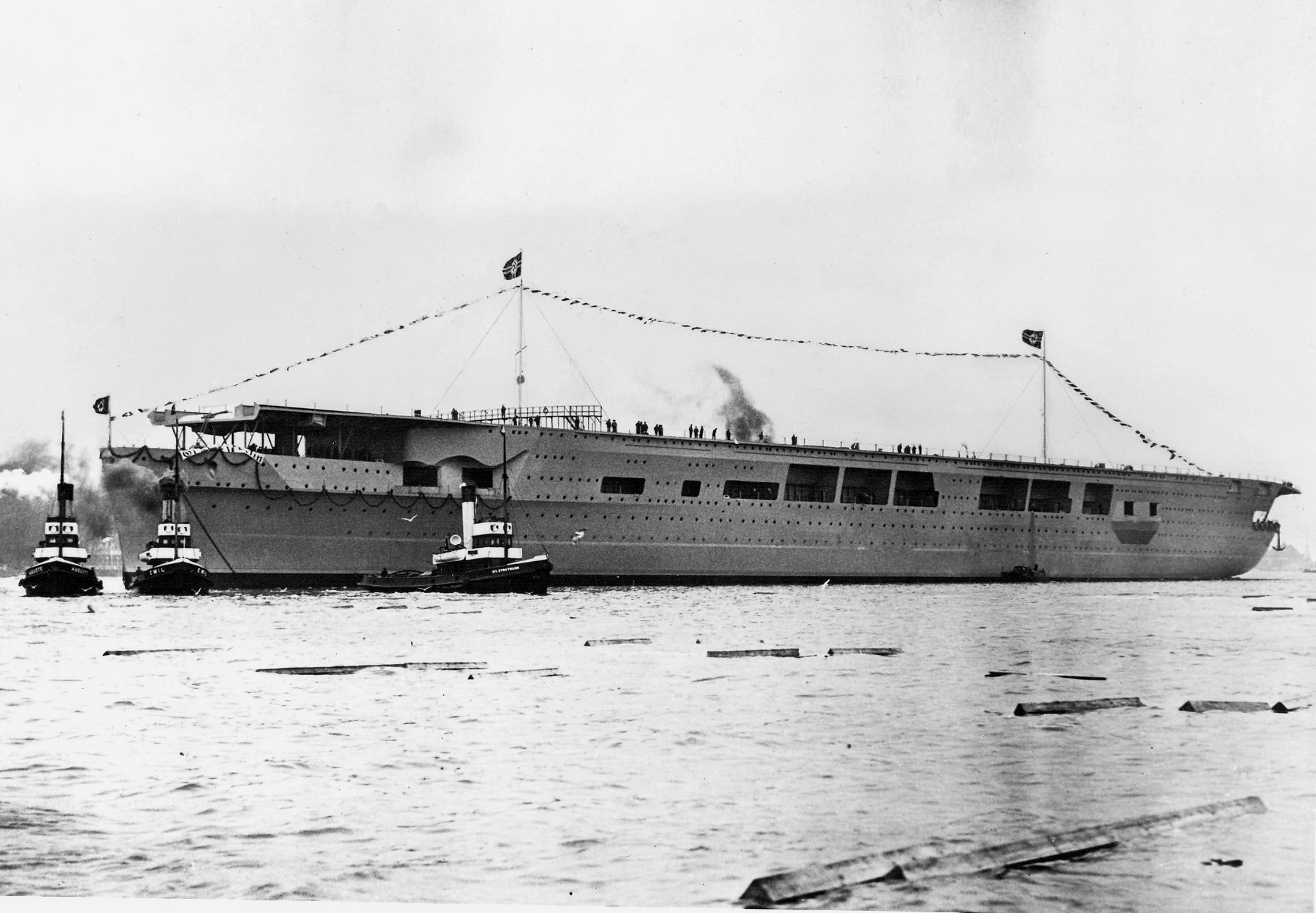
Image: Public domain (U.S. federal government work) · commons.wikimedia.org
Graf Zeppelin
Sunk
Graf Zeppelin was the lead ship of a planned two-carrier class ordered by Nazi Germany's Kriegsmarine as part of Plan Z, and remains the only aircraft carrier ever launched by Germany. She was never completed or commissioned, making her a famous "what if" subject for modelers depicting an unrealized World War II design.
Kits of this ship
+ Add a kit| German DKM Graf Zeppelin Aircraft Carrier | Trumpeter | 1:700 | Injection-Molded Plastic | Available | |
| Aircraft Carrier Graf Zeppelin | Revell | — | Injection-Molded Plastic | Discontinued | |
| German Navy Aircraft Carrier DKM Graf Zeppelin | Trumpeter | 1:350 | Injection-Molded Plastic | Available |
Plans
No plan sets listed for this ship yet. Know of museum, archive or publisher drawings? Add them so the next builder can find them.
Links go to the publisher's or museum's own page. Ship Modelers Database lists plan sets; it doesn't host or display the drawings.
Build logs
+ Link a build logNo build logs linked yet.
Resources
+ Submit a resourceHistory & specifications
- Navypedia: Graf Zeppelin aircraft carriersWebsite
Concise technical data sheet with dimensions, armor, armament and propulsion figures useful for scale accuracy.
- Wikipedia: German aircraft carrier Graf ZeppelinWebsite
Comprehensive overview of design, construction history, and fate; good general reference for a modeler.
- Wikipedia: Graf Zeppelin-class aircraft carrierWebsite
Covers the class design process, armament, and aircraft complement in more technical detail.
History
Specifications
As designed she displaced about 33,550 long tons at full load, measured 262.5 m (861 ft) overall with a 36.2 m beam and 8.5 m draft, and was powered by four geared turbines generating 200,000 shp for a top speed of 33.8 knots. Her intended air group was to be 42 aircraft — navalized Ju 87 Stuka dive bombers, Bf 109 fighters, and (in early plans) Fieseler Fi 167 torpedo bombers — and she was to carry sixteen 15 cm guns plus a secondary anti-aircraft battery, giving her heavy cruiser-level self-defense armor and armament unusual among contemporary carriers.
Service history
Laid down 28 December 1936 at the Deutsche Werke yard in Kiel and launched 8 December 1938, construction was repeatedly delayed and suspended due to shifting wartime priorities, interservice rivalry between the Navy and Luftwaffe, and material shortages. Work resumed briefly in 1942 but was halted for good in early 1943 after Hitler, furious over the Kriegsmarine's poor showing at the Battle of the Barents Sea, ordered large surface ship construction curtailed.
Notable facts
As Soviet forces advanced in 1945 the German crew scuttled the unfinished hull at Stettin; it was later raised by the Soviets, used briefly, and finally sunk as a target ship in August 1947. The wreck's final fate was debated for decades until Polish surveys in the 2000s located and identified it on the Baltic seabed, closing out one of naval history's enduring mysteries.