 Ship Modelers Database
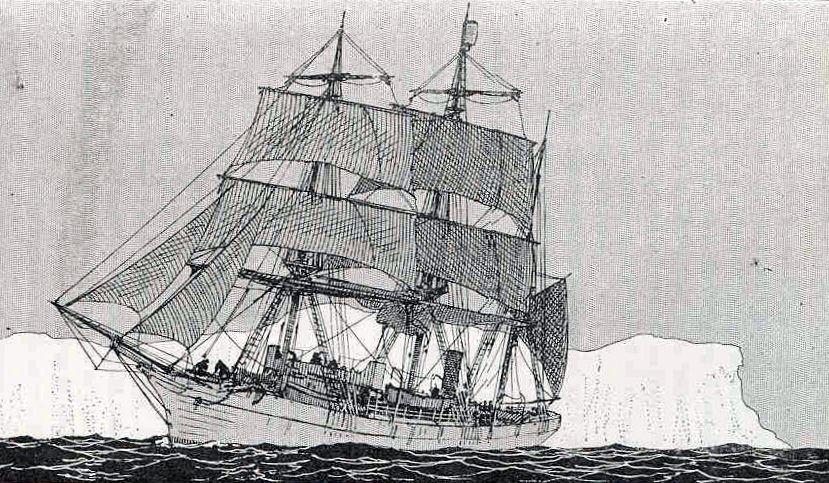
Image: Public domain · commons.wikimedia.org
French ship Pourquoi-Pas (1908)
Sunk (wrecked 1936)
Pourquoi-Pas was the fourth ship of that name built for French polar explorer Jean-Baptiste Charcot, constructed specifically for his second Antarctic expedition. She is one of the most famous French polar research vessels of the early 20th century and is remembered both for her scientific achievements and for the dramatic storm that sank her off Iceland with Charcot aboard.
Kits of this ship
+ Add a kit| Pourquoi-Pas - 3 Masts | Billing Boats | — | Plank-on-Bulkhead | Discontinued |
Plans
No plan sets listed for this ship yet. Know of museum, archive or publisher drawings? Add them so the next builder can find them.
Links go to the publisher's or museum's own page. Ship Modelers Database lists plan sets; it doesn't host or display the drawings.
Build logs
+ Link a build logNo build logs linked yet.
Resources
+ Submit a resourceHistory & specifications
- French Wikipedia: Pourquoi Pas ? IVWebsite
Detailed French-language article with additional specification data, expedition list, and bibliography useful for modelers seeking original plans references.
- Wikipedia: Pourquoi-Pas (1908)Website
Overview article covering the ship's construction, specifications, expeditions, and final wreck.
Photos
- Wikimedia Commons: Pourquoi-Pas (1908) photographPhoto
Public-domain 1917 photograph of the ship sourced from the University of Washington Libraries, useful as a visual reference for hull and rig details.
History
Specifications
The vessel was a three-masted barque built at Saint-Malo to designs by François Gautier, fitted with an auxiliary engine alongside her sailing rig and containing three onboard laboratories plus a library. She displaced roughly 445 tonnes, measured about 40 m in length with a 9.2 m beam and 4.3 m draught, made about 7.5 knots, and could carry a complement of around 35 crew plus up to 5 embarked scientists.
Service history
From 1908 to 1910 Charcot took the ship on his second Antarctic expedition, wintering at Petermann Island and completing the mapping of Alexander Island while discovering Charcot Land. In 1912 she became the French Navy's first school ship, and from 1918 to 1925 Charcot used her for oceanographic missions in the North Atlantic, English Channel, Mediterranean and Faroe Islands studying underwater lithology and geology with drag nets. From 1925 she shifted to annual Arctic voyages, including an expedition to the eastern coast of Greenland in 1926, though Charcot by then had relinquished command due to age while remaining aboard as scientific mission chief.
Notable facts
On 16 September 1936 the ship was wrecked on the reefs of Álftanes off Iceland during a violent cyclonic storm while returning to Saint-Malo; of the forty men aboard only one survivor, master steersman Eugène Gonidec, was rescued, and Charcot himself died at age 69. The wreck ended a nearly three-decade career that had made the ship a celebrated name in French polar exploration, later honored by a modern IFREMER/French Navy research vessel named Pourquoi Pas? (2005).