 Ship Modelers Database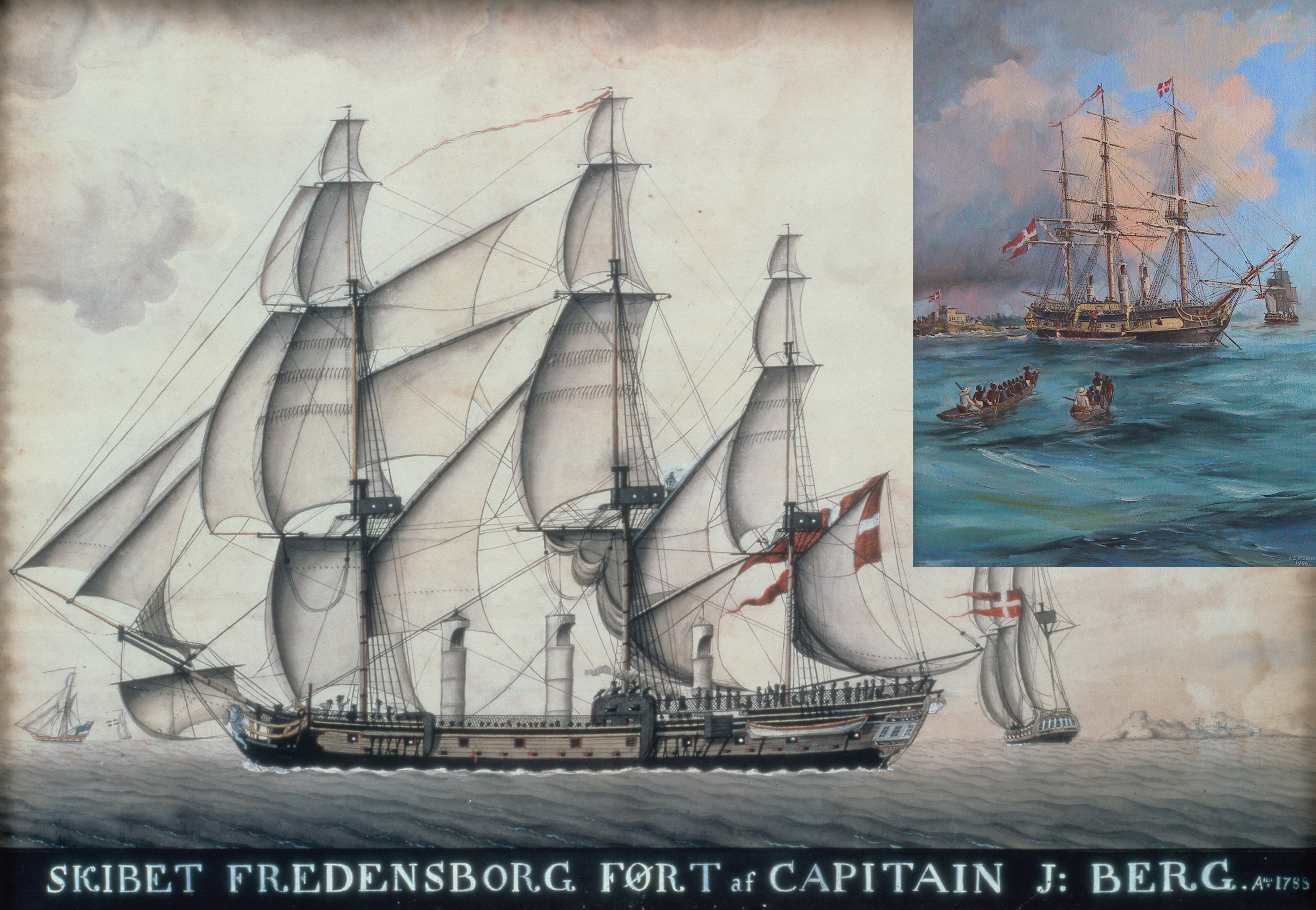
Fredensborg (slave ship)
- Type
- Frigate
- Period
- 18th Century
- Nation
- Denmark
Overview: Fredensborg was a Danish-Norwegian frigate built in Copenhagen that was converted for use as a slave ship in the transatlantic triangular trade. She is one of the best-documented slave ships in history because her wreck was located and excavated, and her captain's log survived, allowing historians to reconstruct her final voyage almost day by day. Specifications: She was originally launched as Cron Prindz Christian in 1753, a roughly 100-foot (about 31-metre) frigate built at the Royal Danish Chartered West Indian and Guinean Company's shipyard in Copenhagen, and was renamed Fredensborg in 1756 after Fort Fredensborg, a Dano-Norwegian trading post on the Danish Gold Coast. As a slaver she was fitted with specialized equipment including canvas ventilation funnels ("windsails") rigged over the hatches to funnel fresh air down into the holds where captives were confined. Service History: Under Captain Espen Kiønigs she departed Copenhagen on 24 June 1767, reached the West African coast on 1 October, and took on captives at Fort Christiansborg and Fort Fredensborg before sailing for the Danish West Indies on 21 April 1768. She embarked 265 captives and disembarked 235 at St Croix on 9 July 1768, a mortality rate of about 11 percent, with 12 of her 40 crew also dying en route; Johan Frantzen Ferentz took over as captain before the ship began her return voyage. On 1 December 1768, while homeward bound, she was wrecked in a storm off Tromøy near Arendal on the southern coast of Norway. Notable Facts: The wreck lay undiscovered for more than two centuries until divers, including Leif Svalesen, located it off the Norwegian coast in 1974, leading to an excavation that recovered over a thousand artifacts and made Fredensborg one of only a handful of slave ships ever archaeologically excavated worldwide. Svalesen's subsequent book, The Slave Ship Fredensborg, used the recovered ship's log and other archival sources to reconstruct the voyage in detail, including specifics on provisioning, crew, and the treatment of the enslaved people aboard. A later, differently built ship of the same name, Fredensborg II, was constructed in 1788 and is the vessel depicted in the well-known period painting often associated with this ship's name.
Kits of this ship
No kits linked yet.
Plans
+ Suggest a plan setNo plan sets listed yet.
Links go to the publisher's or museum's own page. Ship Modelers Database lists plan sets; it doesn't host or display the drawings.
Build Logs
+ Link a build logNo build logs linked yet.
Resources
+ Submit a resource- Cambridge: The Slave Ship Fredensborg: History, Shipwreck, and FindArticle
Scholarly article by one of the ship's discoverers covering the wreck's history, loss, and excavation findings including recovered cargo.
- Slavery Images: Slave Ship Fredensborg II, 1788Museum
Describes the period painting of the later Fredensborg II, including details on the ventilation funnel rigging distinctive to slave frigates, useful for accurate detailing.
- Wikimedia Commons: File:Fredensborg (1753 ship).jpgMuseum
18th-century painting of the slave ship, held as public domain historical artwork, suitable as a reference image for the ship's appearance.
- Wikipedia: Fredensborg (slave ship)Website
General overview of the ship's construction, renaming, voyages, and loss, useful as a quick reference for modelers.