 Ship Modelers Database
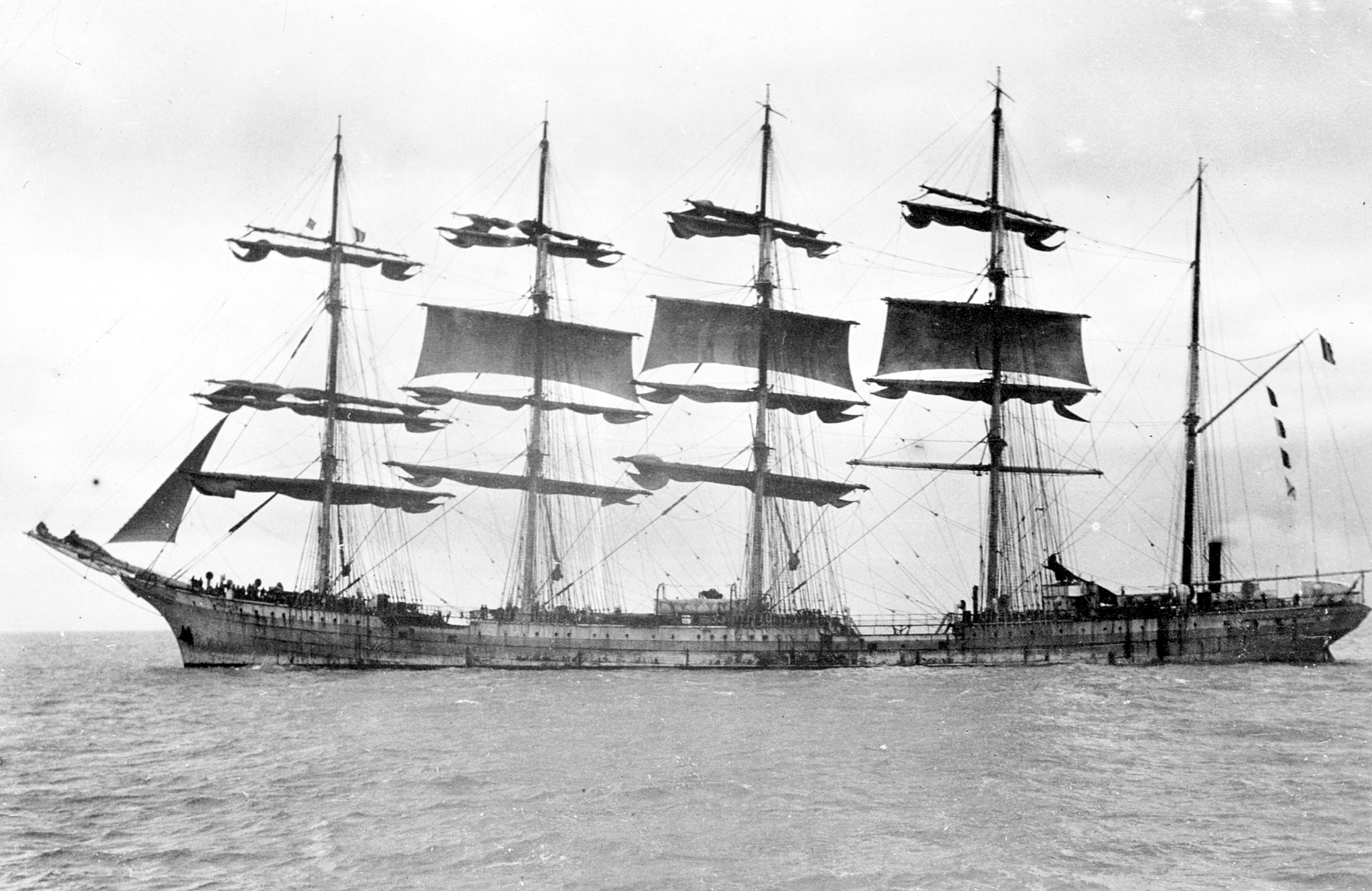
Image: Public domain (PD-Australia, Allan C. Green collection, State Library of Victoria) · commons.wikimedia.org
France II
Wrecked - ran aground on Teremba reef, New Caledonia on 12 July 1922 and was abandoned as a total loss; no lives were lost.
France II was an enormous French merchant sailing ship, square-rigged as a five-masted steel-hulled barque, built for the nickel-ore and chrome-ore trade between New Caledonia and France. She was among the largest commercial sailing vessels ever built, and for decades after her loss remained a benchmark against which later giant sailing ships were measured.
Kits of this ship
+ Add a kit| France II Wooden Model Ship | GN (sold via Premier Ship Models) | — | Solid Hull | Available |
Plans
No plan sets listed for this ship yet. Know of museum, archive or publisher drawings? Add them so the next builder can find them.
Links go to the publisher's or museum's own page. Ship Modelers Database lists plan sets; it doesn't host or display the drawings.
Build logs
+ Link a build logNo build logs linked yet.
Resources
+ Submit a resourceHistory & specifications
- Wikipedia: France II (ship)Website
Overview article with specifications, construction history, and loss of the five-masted barque France II; useful baseline for dimensions and service history.
History
Specifications
The ship was roughly 146.5 metres (480 ft) long overall, displaced about 10,710 metric tons, and was measured at 5,633 gross register tons, giving her the greatest cargo capacity of any sailing ship built up to that time. Her masts, yards and spanker boom were steel tubing, and she carried a huge 6,350 square metre sail area on a "jubilee" or bald-headed rig, with no royals above double topsails and topgallants, giving her hull a notably wide, low-slung profile compared to other five-masted barques of the era. She was also fitted with two 950-horsepower Schneider diesel engines for auxiliary propulsion, though these were removed in 1919.
Service history
Built in 1911-1913 by Chantiers et Ateliers de la Gironde at Lormont near Bordeaux to the design of chief engineer Gustave Leverne, France II made her maiden voyage in November 1913 from Glasgow to Thio, New Caledonia, with a cargo of coke. She spent her career largely on the long run between France and New Caledonia carrying nickel and chrome ore. On a homeward passage in 1922 with a cargo of chrome ore she ran aground at night on the Teremba reef near Nouméa; her owners declined to pay for a tug to refloat her given falling cargo rates, and she was left to break up on the reef with no loss of life.
Notable facts
France II is frequently cited alongside her near-contemporaries Potosi, R.C. Rickmers and Preussen as one of the handful of five-masted barques ever built, and her design directly inspired the modern replica cruise ship Golden Horizon (originally Flying Clipper), launched in 2017 as the largest sailing ship ever built. Modelers should note the distinctive bald-headed rig (no royal sails) and the unusual mix of deadeye versus turnbuckle rigging seen on contemporary builder's and sailor's models, a detail that has been debated on build-log forums for scratch and kit versions of the ship.