 Ship Modelers Database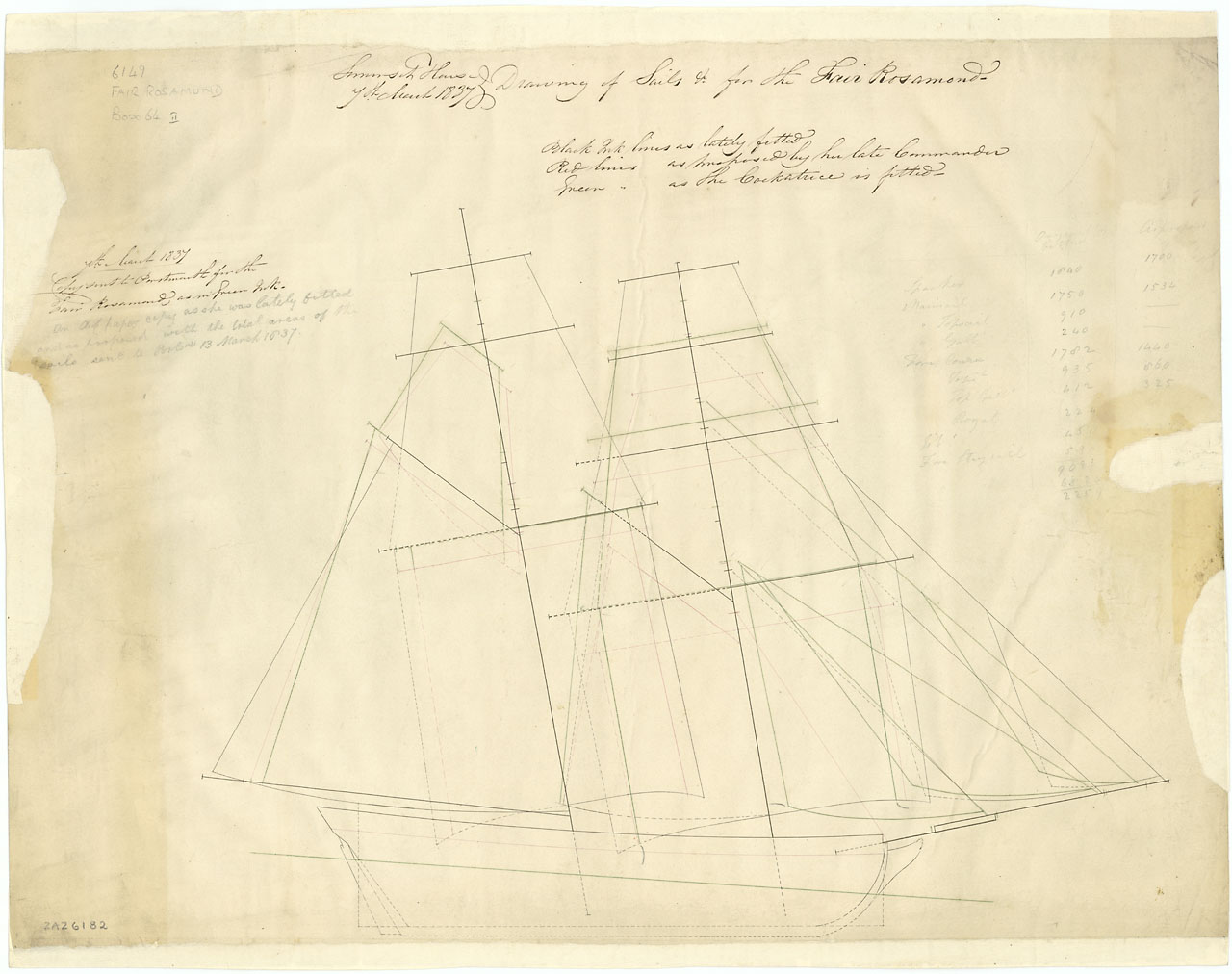
Dos Amigos
- Type
- Clipper
- Period
- 19th Century
- Nation
- United States
Overview: Dos Amigos was a fast, low-slung Baltimore-clipper-type brigantine/schooner built in the United States and used by Spanish/Cuban interests to run enslaved Africans from West Africa to Cuba's sugar plantations in the early 1830s. She is notable both for her role as a slaver and for her dramatic second career as a Royal Navy anti-slavery cruiser, HMS Fair Rosamond, after her capture. Specifications: Sources give her length as roughly 83 feet and tonnage around 172 tons, built in the Baltimore clipper style prized for speed and shallow draft to slip in and out of African slaving ports. As a slaver she carried a single carronade, a crew of about 34, and was not coppered; on 9 November 1830 she was taken with a reported 567 captives aboard. Once purchased into Royal Navy service and renamed Fair Rosamond, she was coppered at Ascension Island, rearmed with an 18-pounder pivot carronade and a 6-pounder field gun, and crewed by about 35 officers and men under Lieutenant Henry Huntley. Service History: Dos Amigos was captured off West Africa by HMS Black Joke, herself a former slaver turned Royal Navy anti-slavery brig, and condemned by the British and Spanish Court of Mixed Commission at Sierra Leone. Commodore Jonathan Hayes purchased her for the Royal Navy and renamed her Fair Rosamond, and she went on to serve with the West Africa Squadron, capturing further slavers including La Pantica in 1834 and El Esplorado and La Mariposa in 1836, before being broken up in 1845. Notable Facts: Naval historians disagree on her exact origin: Howard Chapelle held she was Baltimore-built (possibly at Portsmouth, Virginia), while other researchers such as Footner suggested Bermuda, the Caribbean, France, or Britain, and Basil Lubbock simply described her as an American pilot-boat type of the "deep Baltimore" style. In 1832 the Royal Navy took her lines off in dry dock at Portsmouth, and those plans, now held at the National Maritime Museum, Greenwich, later formed the basis for Chapelle's reconstruction drawings used by modelers. A detailed cutaway model depicting her slave-deck arrangement is held by The Mariners' Museum, a related model is at the Smithsonian's National Museum of American History, and kit manufacturers such as Occre and the old Marine Model Company/Scientific Models have produced kits of the ship, making original build logs a useful supplementary reference.
Kits of this ship
| Dos Amigos | OcCre | 1:53 | Available |
Build Logs
+ Link a build logNo build logs linked yet.
Resources
+ Submit a resource- Wikipedia: HMS Black Joke (1827)Website
Details the capture of Dos Amigos by HMS Black Joke and her subsequent Royal Navy service as Fair Rosamond.
- The Mariners' Museum: Dos Amigos Cutaway Model Catalog EntryMuseum
Museum catalog entry with build details, dimensions, and design provenance debate (Chapelle vs Footner) useful for modelers.
- Smithsonian NMAH: Ship Model Dos AmigosMuseum
Smithsonian object record giving hull dimensions (83 ft, 172 tons) and probable build location.
- Wikimedia Commons: HMS Fair Rosamond (ship, 1831) CategoryWebsite
Collection of period images of the ex-Dos Amigos as HMS Fair Rosamond, sourced from the National Maritime Museum, Greenwich.
- Royal Museums Greenwich: Sailing vessel H.M.S. Fair Rosamond (ex-slaver Dos Amigos)Museum
Period pen and ink drawing of the ship held by the National Maritime Museum, with brief provenance notes.
- Marine Model Artist: Fair Rosamond Build FeatureWebsite
Builder's notes and photos of a scratch-modified kit model of Fair Rosamond/Dos Amigos, useful as a modeling reference.
- Wikimedia Commons: FAIR ROSAMOND 1831 RMG J2145.jpgMuseum
1837 pen-and-ink style drawing of Fair Rosamond (ex-Dos Amigos), digitized from a Royal Museums Greenwich original and hosted on Wikimedia Commons.