 Ship Modelers Database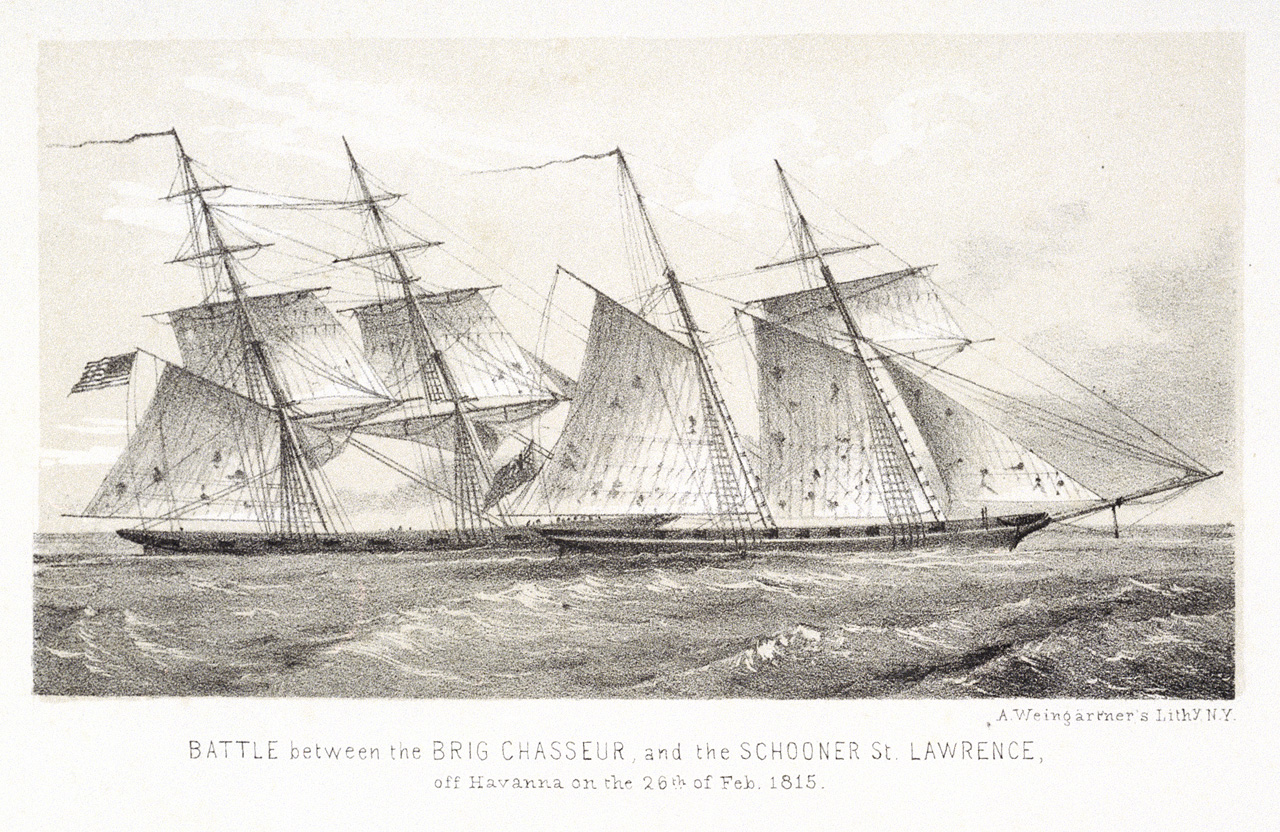
Chasseur (Pride of Baltimore privateer, 1812)
- Type
- Schooner
- Period
- 19th Century
- Nation
- United States
Overview: Chasseur was a Baltimore-built topsail schooner, a classic "Baltimore Clipper," and one of the most celebrated American privateers of the War of 1812. Her bold 1814 cruise into British home waters under Captain Thomas Boyle earned her the nickname "Pride of Baltimore" from Niles' Weekly Register, a name later given to the modern replica vessels Pride of Baltimore and Pride of Baltimore II. Specifications: Built by master shipwright Thomas Kemp at Fell's Point, Baltimore, and launched 12 December 1812, she measured about 115 ft 6 in in length with a 26 ft 8 in beam and 12 ft 9 in depth of hold, at 356 tons burthen. She carried a topsail schooner rig with raked masts and an oversized sail area for speed, and was armed with 16 x 12-pounder guns, with a wartime complement of around 160 men. Service History: Originally built as a merchant vessel for owner William Hollins, Chasseur was converted to privateering when the British blockade of the Chesapeake curtailed normal trade. Under captains Pearl Durkee, William Wade, and finally Thomas Boyle from 1814, she captured or destroyed numerous British merchant vessels; on her most famous cruise Boyle sailed directly to the British Isles and issued a mock proclamation declaring the whole of Britain under blockade by his single ship. She is also noted for the capture of the Royal Navy schooner HMS St Lawrence in February 1815, and she returned triumphantly to Baltimore in March 1815, after the war had already ended. Notable Facts: After the war, Chasseur was engaged in the China trade, reportedly setting a fast record run from Canton, before being sold to Spanish navy agents and renamed Cazador. In Spanish service she was reportedly involved in the South American wars of independence, in action with the Colombian ship Hotspur; like most Baltimore Clippers, built for speed rather than longevity, her ultimate fate afterward is not well documented. No contemporary painting or plan of Chasseur herself is known to survive; the best-known period image is a lithograph depicting her February 1815 action against HMS St Lawrence, useful as a reference for her general rigging and hull lines even though it is a later commemorative work rather than a contemporary portrait.
Kits of this ship
No kits linked yet.
Build Logs
+ Link a build log- Scratch Built Model - Baltimore Clipper "Chasseur" as rigged in 1815Pete · Ships of Scale
Appears to be a completed-model showcase post (scratch built using Model Shipways Pride II hull plans) rather than a step-by-step in-progress build log with photos over time.
Resources
+ Submit a resource- Wikipedia: Chasseur (1812 clipper)Website
Overview article with specifications, career summary, and armament details useful for a modeler's baseline reference.
- Wikimedia Commons: Chasseur vs St Lawrence.jpgMuseum
Period lithograph depicting Chasseur's capture of HMS St Lawrence, useful as a visual reference for hull and rig.
- Pride of Baltimore: Privateer HistoryArticle
Educational history from the modern Pride of Baltimore II organization covering Boyle's command and Chasseur's privateering exploits.
- Chesapeake Bay Magazine: Baltimore's Privateer PrideArticle
Detailed narrative of Boyle's 1814 cruise to the English Channel and the mock blockade proclamation.
- Baltimore Heritage: Advertisement for Sale of the Privateer Schooner ChasseurArticle
Covers the ship's early merchant career, construction by Thomas Kemp, and transition into privateering under captains Wade and Boyle.