 Ship Modelers Database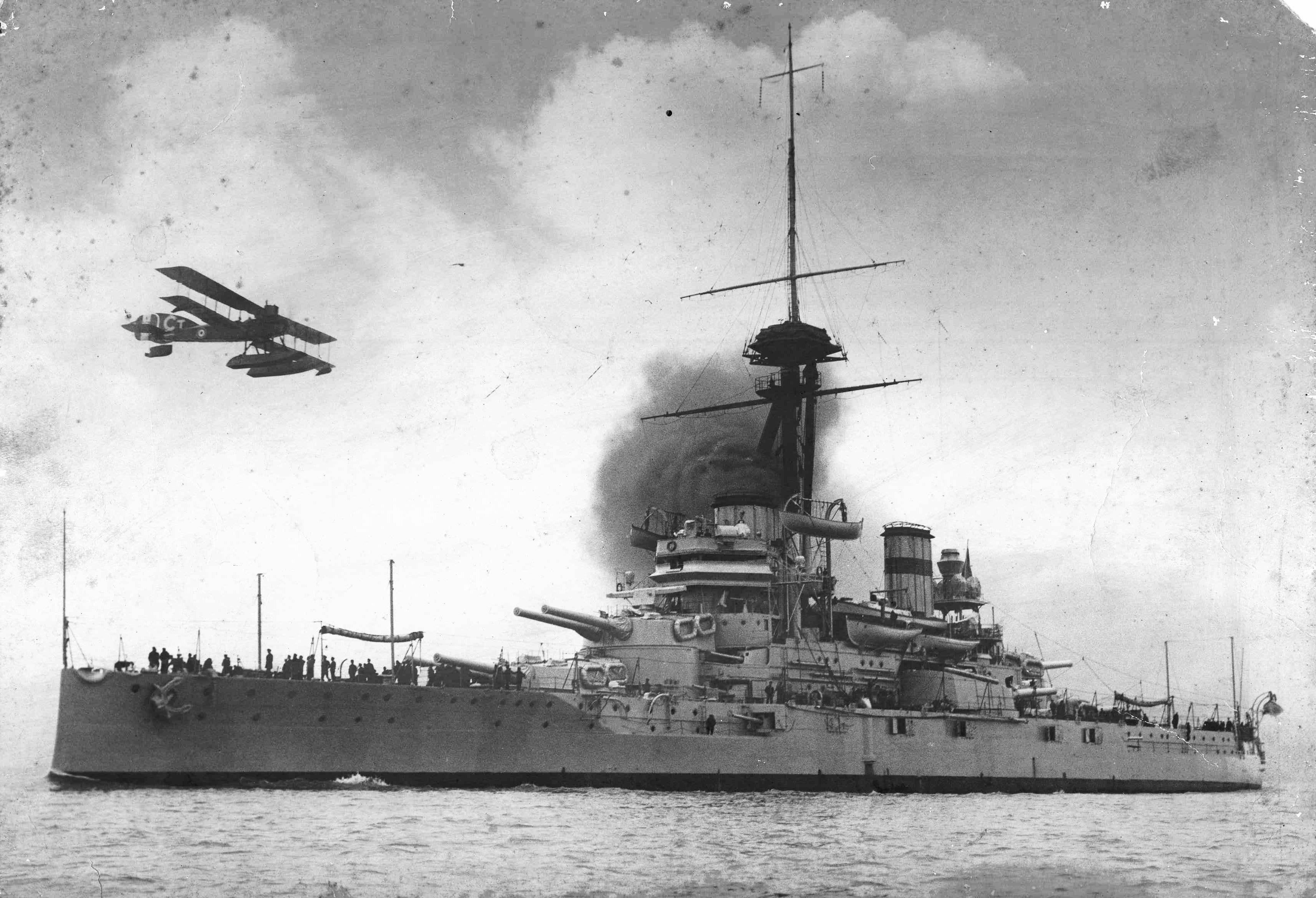
Image: Public domain · commons.wikimedia.org
Brazilian battleship São Paulo
Sunk (lost under tow, 1951)
São Paulo was a dreadnought battleship of the Brazilian Navy, the second of two Minas Geraes-class ships that briefly made Brazil a leading naval power and touched off a South American arms race with Argentina and Chile. She was built in Britain rather than Brazil, giving her a distinctly British-pattern dreadnought silhouette of the HMS Dreadnought era.
Kits of this ship
+ Add a kitNo kits listed for this ship yet.
Plans
No plan sets listed for this ship yet. Know of museum, archive or publisher drawings? Add them so the next builder can find them.
Links go to the publisher's or museum's own page. Ship Modelers Database lists plan sets; it doesn't host or display the drawings.
Build logs
+ Link a build logNo build logs linked yet.
Resources
+ Submit a resourceHistory & specifications
- Wikipedia: Brazilian battleship São PauloWebsite
Primary biographical article covering construction, mutinies, refits, and the 1951 sinking while under tow.
- Wikipedia: Minas Geraes-class battleshipWebsite
Class-level article with specifications table, armament details, and comparative service history useful for modeling accuracy.
Photos
- Wikimedia Commons: Brazilian battleship São Paulo photo (Marinha do Brasil)Photo
Public domain historical photograph of the ship sourced from the Brazilian Navy's own Flickr archive, useful as a visual reference for hull and superstructure details.
History
Specifications
Built by Vickers at Barrow-in-Furness, laid down 30 April 1907, launched 19 April 1909 and commissioned 12 July 1910. She displaced roughly 19,105 tons standard (21,370 tons full load), measured about 500 ft between perpendiculars (543 ft overall) with an 83 ft beam, and originally carried twelve 12-inch/45 caliber guns in four superfiring turrets plus twenty-two 4.7-inch secondary guns in casemates.
Service history
Soon after commissioning she was embroiled in the 1910 Revolt of the Lash mutiny, and in 1918 was sent to the New York Navy Yard for a long-overdue refit (completed January 1920) that added Sperry fire control and Bausch and Lomb rangefinders. In 1922 she shelled rebels holding Fort Copacabana, and in 1924 mutineers seized the ship and sailed her to Montevideo for asylum; in the 1930s her poor material condition ruled out modernization, so she served as a coast-defense and harbor-defense ship, including guarding Recife through World War II.
Notable facts
Stricken in 1947, she lingered as a training hulk until 1951, when she was sold to a British shipbreaker; under tow toward the UK she was lost with her tow lines parting in a gale north of the Azores, and despite searches by British and American aircraft she was never found. Modelers should note her distinctive echelon-mounted wing turrets and the fact that, unlike her sister Minas Geraes, she never received her planned 1930s modernization, so most photos show her in essentially unmodified 1920s configuration.