 Ship Modelers Database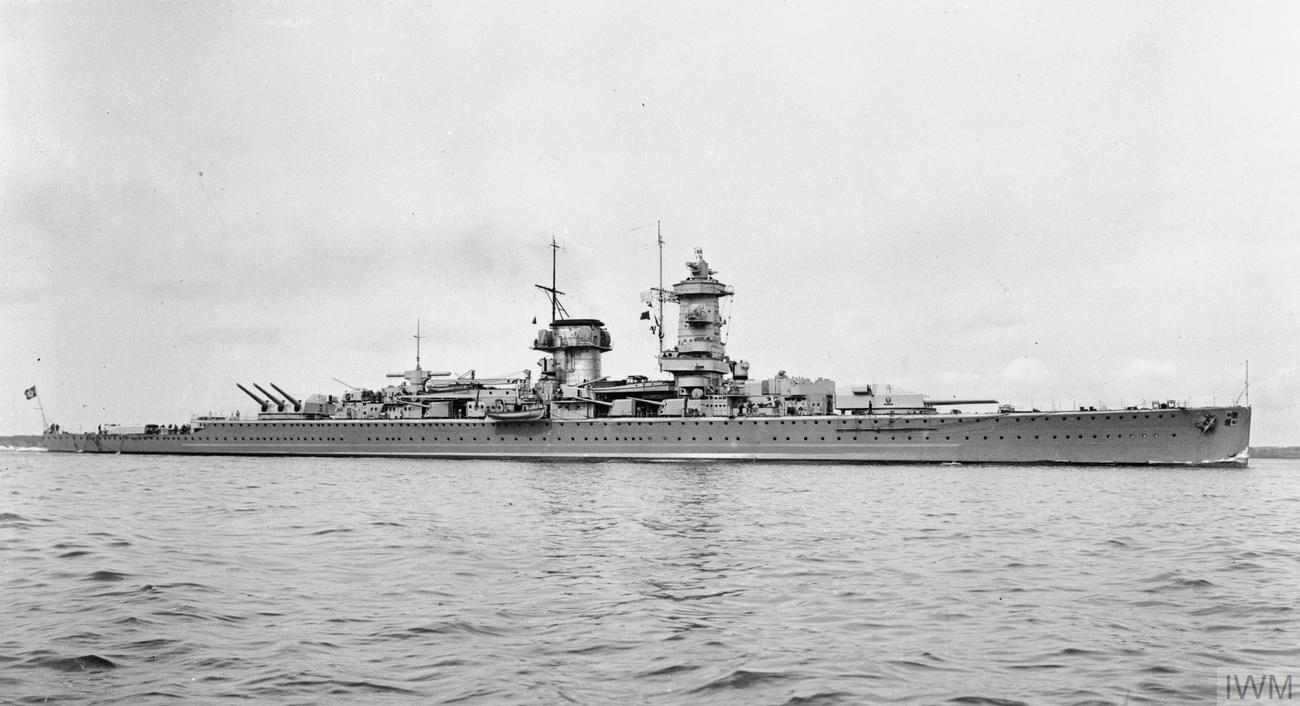
Admiral Graf Spee
- Type
- Battleship
- Period
- 20th Century
- Nation
- Germany
Overview: Admiral Graf Spee was the third and final Deutschland-class Panzerschiff of Nazi Germany's Kriegsmarine, popularly dubbed a "pocket battleship" by the British press because of her unusually heavy armament for a ship nominally limited by the Treaty of Versailles. She is best remembered for her commerce-raiding cruise in the South Atlantic and Indian Ocean in 1939 and for the dramatic Battle of the River Plate and subsequent scuttling. Specifications: The ship was laid down at the Reichsmarinewerft in Wilhelmshaven in October 1932, launched in June 1934, and commissioned in January 1936. She displaced roughly 14,890 tons standard and up to 16,020 long tons at full load, measured 186 m in length with a 21.65 m beam, and was powered by eight diesel engines driving two propellers for a top speed near 28.5 knots. Her main armament consisted of six 28 cm (11 in) guns in two triple turrets, supplemented by 5.9-inch and 4.1-inch secondary guns, torpedo tubes, and two floatplanes, a combination of firepower and speed intended to outgun any cruiser fast enough to catch her and outrun any battleship powerful enough to sink her. Service History: The ship conducted five non-intervention patrols during the Spanish Civil War in 1936–1938 and participated in the Coronation Review of King George VI in May 1937. Admiral Graf Spee was deployed to the South Atlantic in the weeks before the outbreak of World War II, and between September and December 1939 the warship sank nine vessels totaling 50,089 gross register tons, before being confronted by three British cruisers at the Battle of the River Plate on 13 December. The Graf Spee did some damage to the British ships but also received a number of hits during the battle and was forced to take refuge in Montevideo, Uruguay, for repairs. Uruguayan authorities granted only a 72-hour stay, which the Germans considered insufficient to make the ship seaworthy again, and facing an apparently hopeless situation, Captain Langsdorff ultimately decided to scuttle the ship and save the interned crew. Notable Facts: The nine merchant ships she sank were all captured without loss of life, as her captain, Hans Langsdorff, was noted for strictly following the rules of naval warfare when attacking civilian shipping. Langsdorff took his own life days after the scuttling, reportedly wrapped in the ship's ensign, rather than surrender his crew to Uruguay or return them to Germany. The wreck remains partially visible in the River Plate estuary and has since been partially salvaged, with recovered items such as her rangefinder and eagle figurehead becoming notable museum artifacts.
Kits of this ship
No kits linked yet.
Build Logs
+ Link a build logNo build logs linked yet.
Resources
+ Submit a resource- Wikipedia: German cruiser Admiral Graf SpeeWebsite
Comprehensive overview of design, specifications, and service history useful for scale accuracy.
- Royal Museums Greenwich: The German pocket battleship Admiral Graf Spee in 1939Museum
Museum object page with contextual history of the ship's 1939 raiding cruise and the Battle of the River Plate.
- HMS Ajax Association: Panzerschiff Admiral Graf SpeeArticle
Detailed account of the ship's armament, class, and the battle from the perspective of one of her British opponents.
- Wikimedia Commons: Panzerschiff Admiral Graf Spee in 1936.jpgWebsite
Public domain historical photograph of the ship from 1936, sourced from the Imperial War Museum collection via Wikimedia Commons.